For 35 years, the World Bank Group has measured global poverty to track progress toward eradicating what is considered the most severe deprivation of basic human needs—extreme poverty. This goal is at the very heart of our organization’s mission.
Continue readingTag Archives: Global Poverty
March 2024 global poverty update from the World Bank: first estimates of global poverty until 2022 from survey data
Global poverty estimates were updated today on the Poverty and Inequality Platform (PIP).As explained in more detail in the What’s New document, more than 100 new surveys were added to the PIP database, bringing the total number of surveys to more than 2,300. With more recent survey data, this March 2024 PIP update is the first to report a global poverty number for 2020-2022, the period of the COVID-19 pandemic. We estimate that COVID-19 increased extreme poverty in the world, as measured by the international poverty line of $2.15, from 8.9 percent in 2019 to 9.7 percent in 2020 (see Figure 1). This is the first increase in global poverty in decades. It is in line with earlier estimates of the COVID-19 impact which used limited survey data and GDP growth projections.
Continue readingFact Sheet: An Adjustment to Global Poverty Lines
Why did the World Bank decide to update the International Poverty Line, and why now?
As differences in price levels across the world evolve, the global poverty line has to be periodically updated to reflect these changes. Since 2015, the last update, we have used $1.90 as the global line. As of fall 2022, the new global line will be updated to $2.15.
March 2020 global poverty update from the World Bank: New poverty estimates for 2018
The March 2020 global poverty update added more than 200 new surveys to PovcalNet,

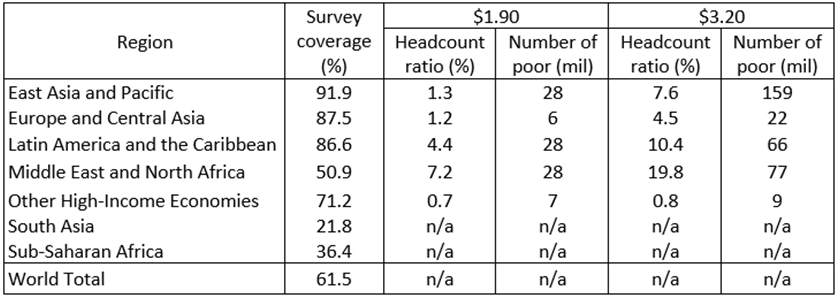
Table 1. Poverty estimates for reference year 2018, different poverty lines
bringing the total number of surveys to more than 1,900. New poverty estimates for the reference year 2018 are now included for some regions, and the previously published global and regional estimates from 1981 to 2015 have been revised, reflecting data revisions and the availability of new data. More details on the revisions can be found in Atamanov et al. (2020).


You must be logged in to post a comment.