eC2: Developing digital applications in village service delivery: Software Development Services

Deadline: 21-Feb-2019 at 11:59:59 PM (Eastern Time – Washington D.C.)

1_zcLRD1dCY-Wzg0I6PepeKA.jpgRequiring an eligible firm to provide software development services for a World Bank program related to improving village service delivery. The assignment will require the firm to design, develop, test, verify, commission various web based and mobile applications (incl. UI/UX and backend), based on latest software development frameworks. The firm will build, operate and transfer the complete technology to the respective government ministry for scaling the application at the project completion. The firm will also be required to pass a cyber-security audit from another agency, as per agreed terms and conditions with the end user of the application. The firm will provide complete documentation including design documents, testing/verification documents and source codes (with updated tracking changes) to the end user at the completion of the project. The firm will also provide technical support and assistance for a period of one year or more to the end user after the project completion.

Continue reading

eC2: Developing digital applications in village service delivery: human centered design

Deadline: 21-Feb-2019 at 11:59:59 PM (Eastern Time – Washington D.C.) images

The assignment requires an eligible firm well-experienced in human-centered design to develop suitable UI/UX interface designs and dashboards for a number of different smartphone and web-based applications related to improving village service delivery. This assignment will require the firm to conduct key informant/expert interviews, focus groups, targeted surveys and other similar studies using the human centered design approach in at least 10 different locations throughout Indonesia.

Continue reading

Investing in resource efficiency – the economics and politics of financing the resource transition

“Moving towards a more responsible and efficient use of natural resources is key, not only aerial-bay-business-1554646.jpgto address resource scarcity, wastage, and the associated environmental effects, but also for incentivising innovation and modernisation towards a circular economy. Resource efficiency essentially means doing more with less, as it allows us to create more value using fewer natural resources. This transition can contribute to sustainable economic growth that generates welfare, while limiting harmful impacts on the environment and hence future generations.” Ángel Gurría, Secretary General, OECD (from Preface, Flachenecker & Rentschler, 2018)

Continue reading

eC2: Market Assessment for Distributed Generation in the Commercial and Industrial Sectors in Southern Africa

Deadline: 18-Feb-2019 at 11:59:59 PM (Eastern Time – Washington D.C.)industry-sunrise-clouds-fog-39553.jpeg

With improvements in technology, particular solar photovoltaic (PV) and battery storage, there are increased opportunities to reduce energy costs and transition to a low carbon economy through distributed generation (DG) in emerging markets. However, there remain some critical obstacles to the scale up of distributed generation (embedded generation) in the commercial and industrial (C&I) space in the southern Africa region (multiple countries), stemming from regulatory barriers, a lack of appropriate incentives as well as information asymmetry related issues. 

Continue reading

eC2: INDIA: Market Assessment for Adoption of E-Mobility

Deadline: 12-Feb-2019 at 11:59:59 PM (Eastern Time – Washington D.C.)  untitled

Rapid urbanization and rising populations in cities has led to increasing number of fuel-based transport vehicles causing severe air and noise pollution. The Government of India (GoI) as well as different States in India are looking for innovating mechanisms to address urban mobility challenges including use of electric vehicles (EV). GoI’s Electric Mobility Mission Plan 2020 focuses on national energy security, addresses environmental impacts from road transport vehicles and supports domestic manufacturing capabilities for electric vehicles. The GoI has identified electric mobility as one of the key focus areas for development.

Continue reading

eC2: Technical advisor for renewable energy PPP options in small and mini grids in Haiti

Deadline:  05-Feb-2019 at 11:59:59 PM (Eastern Time – Washington D.C.) PPPs

The PPIAF-financed activity provides technical assistance and capacity building to the Government to successfully implement these priority actions. In this context, the World Bank is seeking a Technical Advisor to support Government in strategic and operational decisions related to the scale up of distributed renewable energy in Haiti, in particular through developing public-private partnerships (PPP) options for retrofitting of existing utility/municipal mini grids, and building incentives for investments in new mini grids. This will be done through the provision of capacity building, facilitation of lessons learned from similar country contexts and other similar technical advice.

Continue reading

eC2: Consultancy to Support the Ministry of Health to develop the Kenya Health and Research Observatory Web Portal for Tracking and Analysis of Health Data

Deadline: 11-Feb-2019 at 11:59:59 PM (Eastern Time – Washington D.C.) medical-appointment-doctor-healthcare-clinic-health-hospital-medicine[7]

The Consultancy firm will work closely with the MoH, WHO and World Bank focal point for the National Health Observatory in the development of the KHRO portal. The scope of work includes planning, documentation, development and installation of the KHRO web portal into the MoH data center, capacity building of the MOH team in the maintenance and management of the health observatory.

Continue reading

eC2: Cold chain energy efficiency in India: Analysis of EE opportunities in pack houses

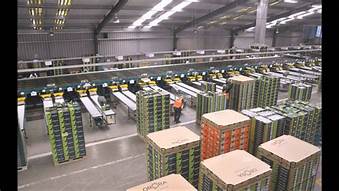
Deadline: 05-Feb-2019 at 11:59:59 PM (Eastern Time – Washington D.C.) th

The objective of this assignment is to support the Bureau of Energy Efficiency in developing options for enhancing the energy efficiency of pack-houses in India. 

The assignment objective will be achieved through an analysis of current energy consumption trends in different types of pack-houses, assessments of the implications of capacity addition projections, identification of energy efficiency improvement opportunities in pack houses, and drawing lessons from relevant experience in India and internationally. The assignment is expected to result in a set of recommendations for BEE action to promote energy efficiency in the cold chain, pack-houses in particular. Actions that BEE may consider in this area can include specific guidance related to equipment and appliance, insulation, building design, and ancillary equipment that can minimize energy consumption.

Continue reading

eC2: Study on Using the Climate Auction Model to Catalyze Energy and Resource Efficient Buildings in Indonesia

Deadline: 28-Jan-2019 at 11:59:59 PM (Eastern Time – Washington D.C.) climate

The World Bank is seeking to hire a firm to conduct an extensive study of the potential to use the Climate Auction Model, as piloted by the Pilot Auction Facility for Methane and Climate Change Mitigation, in the context of green buildings in Indonesia. The study will consist of a Regulatory Assessment, a Market Scoping and an Economic Analysis of the green and affordable housing in Indonesia and enable the World Bank to prepare a pilot in Indonesia.

Continue reading

eC2: Lighting Africa, Nigeria – Consumer Education: Above the Line Phase 3

Deadline:  31-Jan-2019 at 11:59:59 PM (Eastern Time – Washington D.C.) Solar-street-lights-in-Guinea1

Lighting Africa is a joint World Bank/IFC program aimed at helping 250 million people in Sub-Saharan Africa, especially rural, urban, and sub-urban consumers without electricity access to high-quality, safe, and reliable lighting products by the year 2030.
Launched in March 2015 and scheduled to end in April 2019, the Lighting Africa (Nigeria) Program has committed significant resources and worked closely with a range of key stakeholders to develop an off-grid energy market in Nigeria. The market is now in its early growth stage. As the program enters its final quarter, consumer education is focused on addressing the perception, knowledge and purchase barriers encountered by consumers. Accordingly, IFC is soliciting proposals from marketing communications firms to develop and implement a close-out above-the-line consumer education program that builds on previous efforts to drive rapid consumer uptake of quality verified solar lighting products.

Continue reading