
As daily infection rates in South and Central America are increasing significantly, Haiti  faces specific health challenges in battling the coronavirus pandemic. A new report outlines how the pandemic may look different in rich versus developing countries, and how the latter may experience more severe health impacts. As our daily routines now include checking new COVID-19 numbers, data experts are exploring how more timely data could contribute to stronger development outcomes.
Tag Archives: COVID-19
Digital services help governments deliver solutions during COVID-19
There is a meme going around in techie circles that asks, “Who led the digital  transformation in your company? a) the CEO, b) the CTO, or c) COVID-19?” It then shows that the answer is C. It’s funny because it seems true. But, in fact, it’s not. Governments have been actively trying to ensure business continuity during the coronavirus pandemic, in different ways and with varying success.
Weekly Recap
|
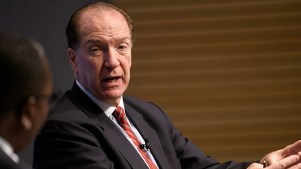
Over the past three months, the World Bank Group has mounted the fastest crisis response in its history. We are now financing emergency operations in over 100 countries – home to 70% of the global population. In this virtual interview, David Malpass, President of the World Bank Group, discussed the path ahead for developing countries. What will a robust and resilient recovery look like? How can we promote economic growth, support the poorest, and sustain businesses and jobs? Watch the replay. |
eC2: TECHNICAL CONSULTANT FOR IFC GLOBAL COVID-19 RESPONSE PROGRAM
Deadline: 08-Jun-2020 at 11:59:59 PM (Eastern Time – Washington D.C.)
The program will consist of multiple projects with individual national or provincial governments in South Asia. IFC will provide capacity building support and advice to governments to effectively engage private sector in areas such as enhancing COVID-19 testing services, increasing availability of critical care and other type of hospital beds and isolation facilities to treat COVID-19 patients, etc. The support will be in the form of developing thought documents, recommending private sector engagement models, drafting model contracts and procurement agreements and short-term contracts, developing technical specifications. This is for a Technical consultant for the project. The technical consultant will provide technical and clinical advise and inputs to IFC for the program.
World Bank Announces $500 Million to Fight Locusts, Preserve Food Security and Protect Livelihoods
Emergency Financing for Locust Affected Countries will help people recover from losses
WASHINGTON, May 21, 2020 — The World Bank Group approved today a US$500 million program to help countries in Africa and the Middle East fight the locust swarms that are threatening the food security and livelihoods of millions of people.
The Emergency Locust Response Program (ELRP), approved today by the World Bank’s Board of Executive Directors, will focus on providing immediate assistance to help poor and vulnerable farmers, herders, and rural households overcome one of the worst locust upsurges in decades. ELRP will provide immediate support to affected households through targeted social safety nets like cash transfers, while investing in the medium-term recovery of agriculture and livestock production systems and rural livelihoods in affected countries.
WBG: Weekly Recap

The World Bank Group is now supporting 100 countries in their fight against coronavirus, helping strengthen health systems, protect the poorest and support jobs. This is the largest and fastest crisis response in our history, and is critical in responding to the COVID-19 pandemic and accelerating a recovery.
COVID-19: How the World Bank is helping countries procure critical medical supplies
In the global crisis caused by the coronavirus (COVID-19), the World Bank is helping  client countries respond. The World Bank Group will deploy up to $160 billion over the next 15 months to support COVID-19 measures that will help countries respond to immediate health consequences of the pandemic, support households and firms, and bolster economic recovery. Our first package of fast-track emergency health financing launched on April 2, 2020, and we are working with our borrowers as they move to implement emergency projects. A key component of this implementation is client access to critical medical equipment and supplies.
Incidence of COVID-19 and Connections with Air Pollution Exposure : Evidence from the Netherlands
The fast spread of severe acute respiratory syndrome coronavirus 2 has resulted in the  emergence of several hot-spots around the world. Several of these are located in areas associated with high levels of air pollution. This study investigates the relationship between exposure to particulate matter and COVID-19 incidence in 355 municipalities in the Netherlands. The results show that atmospheric particulate matter with diameter less than 2.5 is a highly significant predictor of the number of confirmed COVID-19 cases and related hospital admissions. The estimates suggest that expected COVID-19 cases increase by nearly 100 percent when pollution concentrations increase by 20 percent.
The new kids on the block: redefining “critical” minerals essential for a clean energy future
As the world battles the coronavirus (COVID-19) pandemic, and mine sites across the 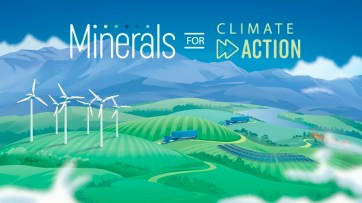 world delay or suspend operations, we are reminded of Matshona Dhliwayo’s quote: “stars are born out of dark moments.” While the price of most so-called “critical minerals” may be down now, demand for these minerals will rise again, and certainly well before 2050. Indeed, the World Bank Group’s latest report has found that the more ambitious the climate targets become, the more minerals and metals will be needed for a low-carbon future. Continue reading
Weekly Round Up
| 3 phases to build more inclusive, efficient and resilient education systems in the wake of COVID-19
The pandemic has already had profound impacts on education. But it is possible to counter those shocks, and to turn crisis into opportunity. The policy responses to achieve this can be summarized in these three overlapping phases. |
 Netherlands for the World Bank
You must be logged in to post a comment.