
Corruption has a disproportionate impact on the world’s most poor and vulnerable, increasing  costs and reducing access to basic services. It erodes trust in governments and is a driver of conflict and fragility. It enables environmental and safety controls to be bypassed, contributing to pollution, environmental damage, and sub-par infrastructure. Corruption also affects private sector trust and investor confidence. And it reduces local revenue collection through tax erosion, depriving governments of resources for funding public goods.
Tag Archives: corruption
The role of ethical leadership in curbing corruption
As much as researchers try to isolate the factors of success in controlling corruption, whether it be at a national scale or that of a particular organization, there is always a residual unexplained element. It may be attributed to culture, systems, or other factors, but one catalytic ingredient is almost always leadership.
Webinar recap: Fraud and Corruption in Multilateral projects: Perspectives, challenges and experiences
Hosted by: Private Sector Liaison Netwerk in Washington D.C. on Thursday May 27
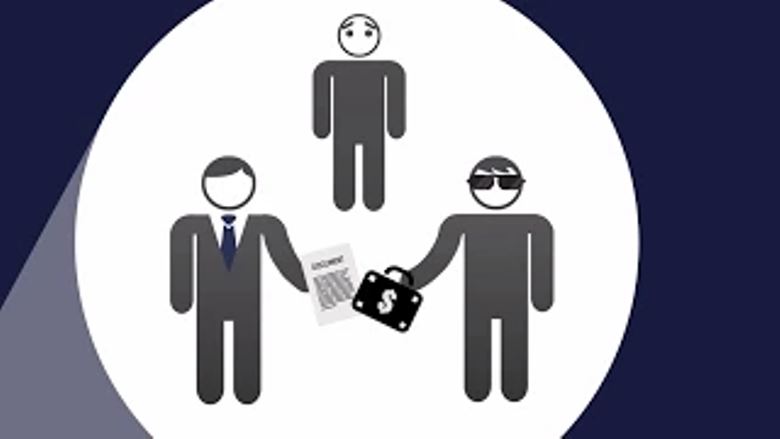
The session was organized by the Private Sector Liaison Network in Washington D.C. to give the private sector the opportunity to get more insight in multilateral organizations compliance and integrity rules and regulations
Speakers:
- Brian Whisler: Partner Baker McKenzie LLP
- Pascal Dubois: Former Vice President Integrity,World Bank Group
- Juan Ronderos: Sanctions Officer for the Inter-American Development Bank Group
Webinar Recording Link : Password: Baker2021!
Reversing the Inequality Pandemic: Speech by World Bank Group President David Malpass
World Bank Group President David Malpass: Speech at Frankfurt School of Finance and Management
 You can watch the replay of the event here
Introduction
Thank you, Jens. And thanks to Frankfurt School and the Bundesbank for hosting me virtually. I look forward to engaging with you and taking questions from students, who will be future business leaders in a post-COVID world. I’m here to set the stage ahead of the IMF and World Bank Group’s Annual Meetings, which will focus primarily on COVID and debt, and will also engage partners in urgent discussions on human capital, climate change, and digital development.
Working in partnership is key to fighting corruption
From massive theft of state assets to the low-level corruption that erodes productivity and weakens service delivery, corruption steals from the poor and erodes progress.
Preventing and controlling corruption: A modern approach to procurement
Supporting good governance and addressing corruption are integral to the Bank’s  development work. Introduced in July 2016, the World Bank’s Procurement Framework plays an important role in this effort by emphasizing value for money (vfm) and fair competition and the highest level of integrity to encourage the participation of the best-performing suppliers.
 VfM means the optimal combination of quality, whole-life costs and sustainability. This approach also enables selection of innovative technologies to address complex development challenges.
Can cryptocurrencies and blockchain help fight corruption?

Technological advances have made it possible to dramatically increase the accountability and transparency of public financing to reduce corruption.
Cheap technology to tackle corruption – Blog by Tony Verheijen
Blog by Tony Verheijen, Dutch national who is currently World Bank Country Director in Serbia, and previously Sector Manager of the Public Sector and Governance department in South Asia. This blog was published on December 15, 2014 on the World Bank website.
“Greetings! Sir, we purchased a property worth 11,000 Euros. We paid a tax for the purchase of 800 Euros and paid a bribe of 400 Euros for property registration”.
Citizens from the Pakistan Province (state) of Punjab – population of over 100 million citizens – send numerous SMS messages similar to this to Shahbaz Sharif, Chief Minister of Punjab, on a daily basis. Messages are then processed and consolidated feed-back on government services is posted on a public dashboard for everyone to see. But, more importantly, they provide Punjab’s administration (and the Chief Minister himself) with real time data about the delivery, quality, and efficiency of various public services. The key is, of course, that Sharif and his government follow up on the information they gather: fixing service delivery problems where they arise, rewarding bureaucrats for the good work and/or punish them for the lousy one.
 Netherlands for the World Bank
You must be logged in to post a comment.