
I had the opportunity to visit Tanzania last month, my first mission to Africa since joining the  World Bank. It was a long-awaited trip, as I wanted to see for myself what more we can do to support countries that are striving to recover from COVID-19. Coming from Indonesia, I also thought there were experiences that I could share from my own country’s development.
Taking the pulse of business: COVID recovery and policy implications
As the global economy gradually finds its way out of the COVID-19 pandemic, we are  reminded each day of the fragility of recovery – threatened by new variants, outbreaks, and case spikes. It’s also a recovery that is uneven and unequal. Many low- and middle-income countries continue to face high levels of transmission as well as bottlenecks to vaccination, which contribute to business activity remaining below pre-pandemic levels.
Development Policy Financing (DPF) Retrospective 2021 Share your views
In the busy streets of Male, the capital of Maldives, Aminath Waheed picks up passengers,  blazing a trail as the city’s only female taxi driver. In the hills of Nepal, 30-year-old Madhukala Adhikari works
The 2021 Development Policy Financing Retrospective reviews one of the World Bank’s three financing instruments – non-earmarked budget financing that supports policy and institutional reforms to help clients achieve sustainable growth and poverty reduction. This Retrospective presents key takeaways on trends and performance of DPFs and their role in supporting development priorities. The analysis is focused on DPFs committed between FY16 and FY21. The World Bank systematically distills lessons from DPF Retrospectives as part of an ongoing effort to learn from implementation. This is the fifth DPF Retrospective since the DPF Operational Policy (OP 8.60) was introduced in August 2004.
Putting People at the Heart of Green, Resilient, and Inclusive Recovery
Global Water Security & Sanitation Partnership: Working with Country Partners for a Resilient Water Future
As the world faces a triple crisis of climate change, COVID-19, and lack of progress on the 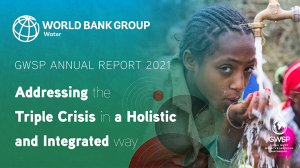 Sustainable Development Goals, the need for global communities and countries to work together for our shared future is more urgent than ever. The GWSP is an action-oriented think tank that works with countries to help them manage their water better for green, resilient, and inclusive development.
 Sustainable Development Goals, the need for global communities and countries to work together for our shared future is more urgent than ever. The GWSP is an action-oriented think tank that works with countries to help them manage their water better for green, resilient, and inclusive development.
 Harnessing transformative technologies to arrest the unfolding human capital crisis
On a global scale, the COVID-19 pandemic has dealt the greatest blow to families and children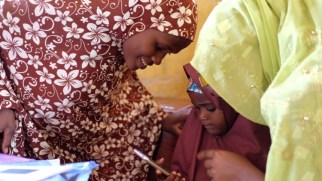 in living memory. Progress in human capital – the knowledge, skills, and health that people need to achieve their potential – is being reversed.
Remittance Flows Register Robust 7.3 Percent Growth in 2021
WASHINGTON, Nov 17, 2021 — Remittances to low- and middle-income countries are projected to have grown a strong 7.3 percent to reach $589 billion in 2021. This return to growth is more robust than earlier estimates and follows the resilience of flows in 2020 when remittances declined by only 1.7 percent despite a severe global recession due to COVID-19, according to estimates from the World Bank’s Migration and Development Brief released today.
A key milestone in the World Bank Group’s anti-racism efforts
As our annual Law, Justice, and Development Week draws to a close, I am proud that we are launching publicly the first World Bank Group Anti-Racism Charter. The Charter is an aspirational, non-binding document, and a significant milestone in our ongoing work to tackle racism and racial discrimination in our workplaces, development work, and local communities. Let me explain how it fits into our efforts, and what it means for us going forward.
6 reasons to blame plastic pollution for climate change
What is the link between plastics and hurricanes Sandy and Katrina in the United States, melting glaciers in Antarctica, summer heat waves and erosion of coastal areas in Australia, and other natural disasters hitting us with greater frequency? We blame climate change for that. However, the contribution of plastic waste and the plastics industry to climate change is often less known or worse, disregarded.
IDA20 Replenishment: Public invited to review draft Deputies’ Report
Ahead of the IDA20 Replenishment pledging meeting in Tokyo next month, the proposed replenishment package is now at an advanced stage. At this meeting, the IDA20 Deputies’ Report will be tabled for endorsement by IDA Deputies and Borrower Representatives. Before this happens, the public is invited to review the draft IDA20 Deputies’ Report and provide comments before November 26.
 Netherlands for the World Bank
You must be logged in to post a comment.