Interested in Doing Business with the World Bank Group? Please see selected opportunities below.
Procurement Framework and Regulations for Projects After July 1, 2016 (worldbank.org)

Interested in Doing Business with the World Bank Group? Please see selected opportunities below.
Procurement Framework and Regulations for Projects After July 1, 2016 (worldbank.org)
WASHINGTON, July 29, 2022 – Some additional 2 million people will benefit from a second  phase of the West Africa regional Food Systems Resilience Program (FSRP-2) approved today for a total amount of $315 million in International Development Association (IDA*) financing. FSRP-2 will support Chad, Ghana and Sierra Leone to increase their preparedness against food insecurity and to improve the resilience of their food systems. This comes at a moment where it is projected that approximately 38.3 million people in West Africa are projected to be in food security crisis.
WASHINGTON, August 3, 2022 – The World Bank Group (WBG) today announced details of its global crisis response package to help developing countries navigate multiple, compounding crises that are hitting the poor and most vulnerable the hardest.
“Multiple crises – including rising inflation, Russia’s invasion of Ukraine, large macroeconomic imbalances, and the shortages of energy, fertilizer and food – are hammering developing countries” said World Bank Group President David Malpass. “The World Bank Group is responding with speed, scale and impact with financing to respond to food insecurity, protect people, preserve jobs, strengthen resilience, and restore growth.”
Women, Business and the Law 2022 is the eighth in a series of annual studies measuring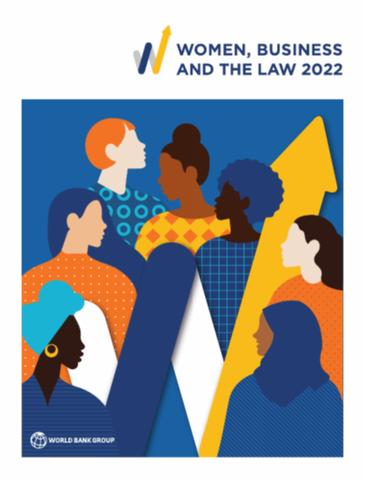 the laws and regulations that affect women’s economic opportunity in 190 economies. The project presents eight indicators structured around women’s interactions with the law as they move through their careers: Mobility, Workplace, Pay, Marriage, Parenthood, Entrepreneurship, Assets, and Pension. Amid a global pandemic that threatens progress toward gender equality, ‘Women, Business and the Law 2022’ identifies barriers to women’s economic participation and encourages reform of discriminatory laws. This year, the study also includes pilot research related to childcare and implementation of the law. By examining the economic decisions women make throughout their working lives, as well as the pace of reform over the past 50 years, Women, Business and the Law makes an important contribution to research and policy discussions about the state of women’s economic empowerment. The indicators build evidence of the critical relationship between legal gender equality and women’s employment and entrepreneurship. Data in ‘Women, Business and the Law 2022’ are current as of October 1, 2021.
What is MRV and why is MRV important to mitigation efforts?
Measurement, Reporting, and Verification (MRV) refers to the multi-step process to measure the amount of greenhouse gas (GHG) emissions reduced by a specific mitigation activity, such as reducing emissions from deforestation and forest degradation, over a period of time and report these findings to an accredited third party. The third party then verifies the report so that the results can be certified and carbon credits can be issued.
Interested in Doing Business with the World Bank Group? Please see selected opportunities below.
Procurement Framework and Regulations for Projects After July 1, 2016 (worldbank.org)
Recognizing that governments across the globe find themselves at an important inflection point—with overlapping crises such as the COVID-19 pandemic, the war in Ukraine and other conflicts, sharp economic slowdown, and the effects of climate change that will touch us all—the World Bank recently launched a report on The Future of Government.
FEATURING: Franziska Ohnsorge, Manager of the Prospects Group, World Bank; Marcello Estevão, Global Director of the World Bank Group’s Macroeconomics, Trade and Investment Global Practice; and Enrique Cárdenas, Mexican economist and economic historian.
Hidden behind the worst global food crisis in a decade, fertilizer prices have skyrocketed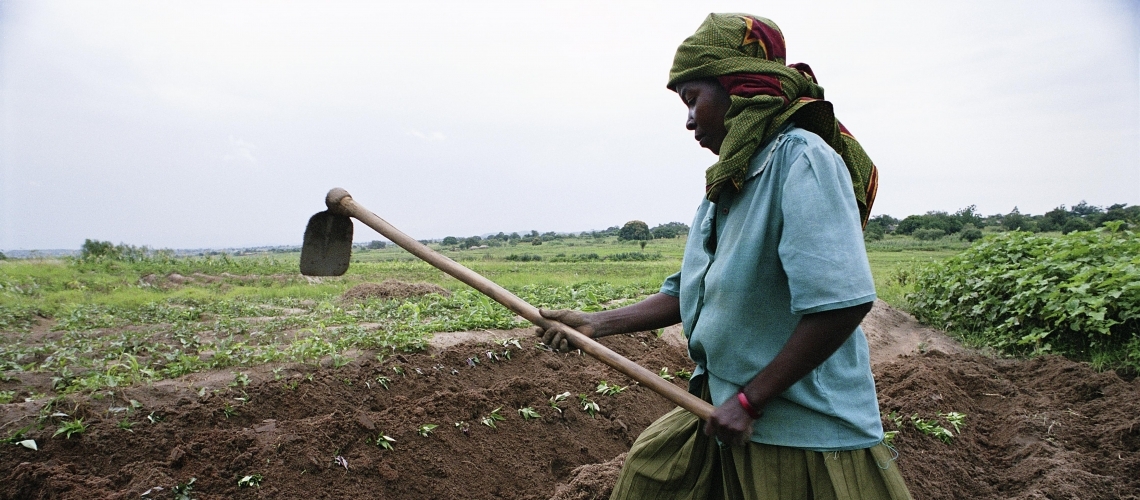 and remain volatile . This poses a serious threat to food security, as the planting season starts this summer. So far, the war in Ukraine has mostly affected countries importing wheat and corn. But many countries, including some major food exporters, are net fertilizer importers. Persistently high fertilizer prices may spread to a broader variety of crops including rice, a staple which has not yet seen war-related price hikes.
Deadline: 10-Aug-2022 at 11:59:59 PM (Eastern Time – Washington D.C.)

The objective of this assignment is to review and assess country level energy demand and supply resources for the period of 2022-2060, develop/update regional power system optimization model, examine potential and benefits of electricity trade among Central Asian countries, and identify interconnection upgrades and potential new cross-border transmission projects that would support decarbonization in the region through scaling up of regional electricity trade in Central Asia. The assessment has to be carried out through comparison of the nationally optimized plan and the regionally optimized plan on each countrys generation development, including considering the latest commitments to carbon neutrality/NDCs, as , as well as World Bank Country Climate and Development Reports (CCDR) where applicable, nature of energy security considerations vs integration of regional options.


You must be logged in to post a comment.