WASHINGTON, December 2, 2020 – COVID-related school closures risk pushing an
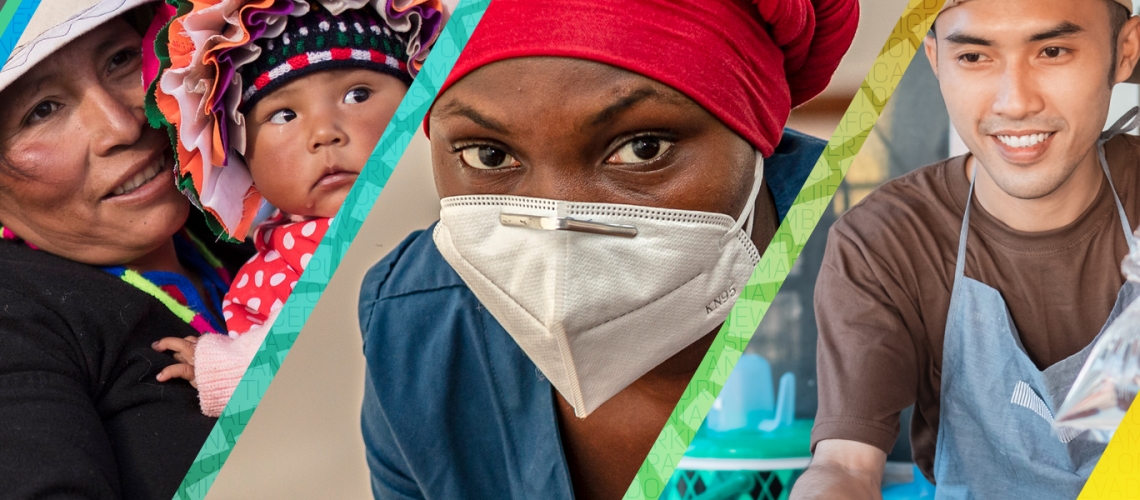
additional 72 million primary school aged children into learning poverty—meaning that they are unable to read and understand a simple text by age 10—according to two new World Bank reports released today. The reports outline a new vision for learning and the investments and policies, including on education technology, that countries can implement today to realize this vision.
eC2: Vietnam: Scaling up of Rural Water Private Sector Participation
Deadline: 09-Dec-2020 at 11:59:59 PM (Eastern Time – Washington D.C.) 
The RWSS Project scope would entails on-lending the funds to approximately 17 Central and Mekong Delta Provinces. These TORs refer to technical assistance services to promote scaling up private sector participation (PSP) in the scope of the tentative RWSS Project, to be carried out over an 18-month period, which is expected to begin approximately in December 2020. The technical assistance is intended to raise the capacity of central and provincial government officials and other stakeholders to understand better the PSP options for RWS and to design, procure, carry out and monitor rural water supply (RWS) investment sub-projects proposed by the provinces, particularly to increase PSP in terms of both capital investments and technical expertise for management of the rural water schemes. The RWSS Project, both technical assistance and lending, would be intended to have a measurable impact on access to RWS, Sustainability, Climate Resilience, Pro-poor Impact, and PSP of RWS in the participating provinces.
IDA and the Private Sector Join Forces to Fight the Pandemic in the Most Fragile Countries
Why we need to invest in conflict resolution for better biodiversity outcomes
The COVID-19 pandemic is leading to increased poverty and inequality, further intensifying the
need to focus on a recovery that is inclusive and sustainable. The UN’s Post-2020 Biodiversity Framework is a key step towards the 2050 vision of “Living in harmony with nature,” however, the inconvenient truth is that nature, particularly wildlife, can be very difficult to live with and global solutions do not always easily translate to the local level.
The Adaptation Principles: 6 Ways to Build Resilience to Climate Change
Connecting the Unconnected: What It Takes to Get Households to Connect to Sewerage Networks
eC2: Europe and Central Asia Regional Water Security Initiative: Development of an Assessment Methodology and preparation of Diagnostic reports
Deadline: 14-Dec-2020 at 11:59:59 PM (Eastern Time – Washington D.C.)
Objective: The objective of the assignment is to identify and benchmark current and future challenges around water security in the Europe and Central Asia region; and, to develop a methodology to prepare country and regional water security assessments as well as to provide country specific recommendations. The assignment will also support (a) the assessment and description of a broad story of current and future water security (taking into account inter alia climate change and changes in socio-economic development patterns) that is relevant to policy makers both within and outside of the water sector; and, (b) through the development of the referred platform, contribute to discussions around potential actions to enhance water security and reform agendas through the definition of best-fit practices and international comparison.
eC2: Enabling integration and implementation of urban climate action in national urban plans and climate strategies
Deadline: 10-Dec-2020 at 11:59:59 PM (Eastern Time – Washington D.C.)
The World Bank is undertaking analytical work on Long-Term Low-Carbon Urban Development to support national and subnational governments in incorporating urban mitigation action into the new generation of Nationally Determined Contributions (NDCs), urban development interventions, strategies and planning instruments. This work is focused on rapidly urbanizing developing countries, especially in Sub-Saharan Africa and South Asia. The objective of this assignment is to prepare a set of technical notes that identify critical factors and institutional actions required to facilitating transformative change in rapidly urbanizing areas. It will include developing approaches for policy makers to facilitate a transition to long-term decarbonization pathways in line with the Paris Agreement. This transition will be enabled through the formulation of the new generation of NDCs and LTSs, as well as of broader urban strategies that integrate such urban mitigation actions.
eC2: Assessments for Maritime Connectivity, Vulnerability and Strategic Needs in Pacific Island
Deadline: 07-Dec-2020 at 11:59:59 PM (Eastern Time – Washington D.C.)
This activity package will be for:
(i) An assessment of international and domestic maritime connectivity between PICs and main gateway ports for efficient regional connectivity;
(ii) A vulnerability assessment of maritime infrastructure and operations to natural disasters, severe weather events and climate change with consideration to consequences for maritime safety;
(iii) A strategic needs assessment of immediate infrastructure priorities in the PICs to promote blue economy development, particularly in tourism, passenger transport, fisheries, and domestic and international trade.
eC2: Supporting and Strengthening Women Miners Resilience During and After Covid-19 in Mali and Ghana: A systems approach to formalization and empowerment
Deadline: 03-Dec-2020 at 11:59:59 PM (Eastern Time – Washington D.C.)

New approaches to formalization are required to combat the double vulnerabilities facing ASM communities during COVID. The present TOR seeks to hire an experienced consortium of practitioners and researchers who can pilot a new capacity building model for formalization. The pilot will document effectiveness in training and research with behavior change. The purpose being that if successful results emerge from the pilot in Ghana and Mali, a scaled model could be applied in other ASM locales.GH – Ghana
ML – Mali
You must be logged in to post a comment.