
Emergency Financing for Locust Affected Countries will help people recover from losses
WASHINGTON, May 21, 2020 — The World Bank Group approved today a US$500 million program to help countries in Africa and the Middle East fight the locust swarms that are threatening the food security and livelihoods of millions of people.
The Emergency Locust Response Program (ELRP), approved today by the World Bank’s Board of Executive Directors, will focus on providing immediate assistance to help poor and vulnerable farmers, herders, and rural households overcome one of the worst locust upsurges in decades. ELRP will provide immediate support to affected households through targeted social safety nets like cash transfers, while investing in the medium-term recovery of agriculture and livestock production systems and rural livelihoods in affected countries.

 client countries respond. The World Bank Group will deploy up to $160 billion over the next 15 months to support COVID-19 measures that will help countries respond to immediate health consequences of the pandemic, support households and firms, and bolster economic recovery. Our first
 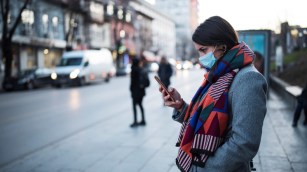 emergence of several hot-spots around the world. Several of these are located in areas associated with high levels of air pollution. This study investigates the relationship between exposure to particulate matter and COVID-19 incidence in 355 municipalities in the Netherlands. The results show that atmospheric particulate matter with diameter less than 2.5 is a highly significant predictor of the number of confirmed COVID-19 cases and related hospital admissions. The estimates suggest that expected COVID-19 cases increase by nearly 100 percent when pollution concentrations increase by 20 percent.
  disease, COVID-19, has reverberated through every corner of the globe—taking lives, destroying livelihoods, and changing everything about how we interact with each other and the world.
 social distancing requirements during the coronavirus pandemic (COVID-19). Digital technologies are instrumental in supporting health care systems, not only though telemedicine and COVID screening apps, but also through Big Data and artificial intelligence analytics for mobility patterns, epidemiological models, and contact tracing. And in many other sectors, digital is also the new normal for individuals, governments, and businesses around the world.
 Netherlands for the World Bank
You must be logged in to post a comment.