World Bank Announces Planned Actions for Global Food Crisis Response

$30 billion available for implementation to address food insecurity over next 15 months

WASHINGTON, May 18, 2022—The World Bank today announced actions it plans to take as part of a comprehensive, global response to the ongoing food security crisis, with up to $30 billion in existing and new projects in areas such as agriculture, nutrition, social protection, water and irrigation. This financing will include efforts to encourage food and fertilizer production, enhance food systems, facilitate greater trade, and support vulnerable households and producers.

“Food price increases are having devastating effects on the poorest and most vulnerable,” said World Bank Group President David Malpass. “To inform and stabilize markets, it is critical that countries make clear statements now of future output increases in response to Russia’s invasion of Ukraine. Countries should make concerted efforts to increase the supply of energy and fertilizer, help farmers increase plantings and crop yields, and remove policies that block exports and imports, divert food to biofuel, or encourage unnecessary storage.”

The World Bank is working with countries on the preparation of $12 billion of new projects for the next 15 months to respond to the food security crisis. These projects are expected to support agriculture, social protection to cushion the effects of higher food prices, and water and irrigation projects, with the majority of resources going to Africa and the Middle East, Eastern Europe and Central Asia, and South Asia. In addition, the World Bank’s existing portfolio includes undisbursed balances of $18.7 billion in projects with direct links to food and nutrition security issues, covering agriculture and natural resources, nutrition, social protection, and other sectors. Altogether, this would amount to over $30 billion available for implementation to address food insecurity over the next 15 months. This response will draw on the full range of Bank financing instruments and be complemented by analytical work.

The World Bank Group’s global response will address four priorities:

  • Support production and producers: Take actions to enhance next season’s production by removing input trade barriers, focusing on more efficient use of fertilizers, and repurposing public policies and expenditures to better support farmers and output.
  • Facilitate increased trade: Build international consensus (G7, G20, others) and commitment to avoid export restrictions that increase global food prices and import restrictions that discourage production in developing countries.
  •  Support vulnerable households: Scale up targeted, nutrition-sensitive social protection programs and replenish early-response financing mechanisms.
  • Invest in sustainable food and nutrition security: Strengthen food systems to make them more resilient to rising risks (conflict, climate, pests, diseases), trade disruptions and economic shocks – balance immediate/short-term needs with long-term investments.

The World Bank gained extensive experience in response to the 2007-2008 global food price crisis through the temporary Global Food Crisis Response Program (GFRP) that received donor contributions and channeled funds to 49 affected countries through 100 projects. Since then, the Bank had built up new tools dedicated to responding to food security crises, including the IDA Crisis Response Window. The World Bank also hosts the Global Agriculture and Food Security Program (GAFSP), which is an existing financial intermediary fund dedicated to improving food security in low-income countries and could be replenished to help fund the response to the current global food crisis.


Contacts

Washington D.CDavid Theis

202-458-8626
dtheis@worldbankgroup.org

Blended finance can catalyze renewable energy investments in low-income countries

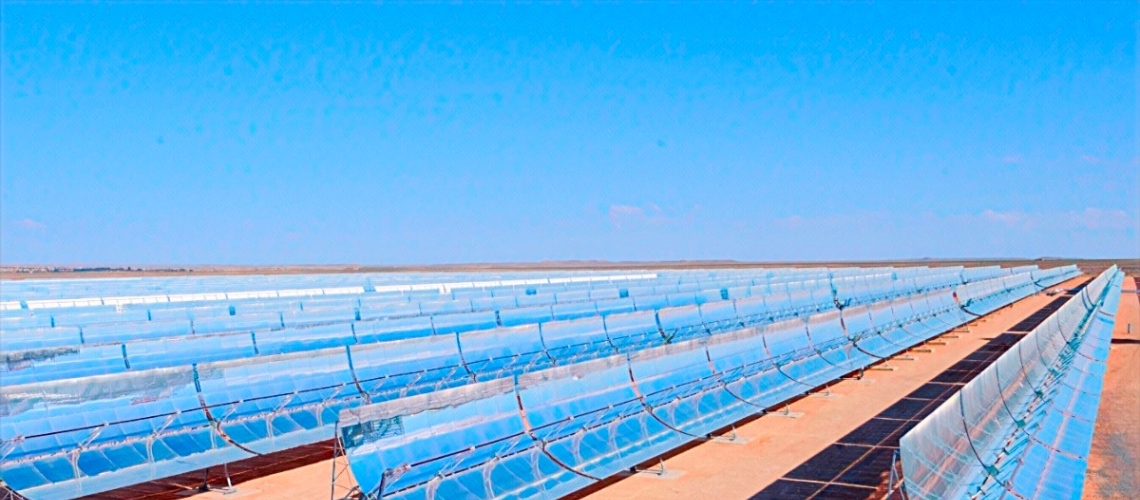
Achieving the United Nations Sustainable Development Goals will require massivesolar_porwe_wb investment in developing countries. Blended finance, which combines concessional public funds with commercial funds, can be a powerful means to direct more commercial finance toward impactful investments that are unable to proceed on strictly commercial terms. 

Blended finance has grown in the past decade. In 2021 it represented an aggregated financing of over $160 billion, with annual capital flows averaging approximately $9 billion since 2015One of the most compelling aspects of blended finance is that it uses relatively small amounts of donor funding to rebalance a project’s risk profile.   With this small infusion of concessional funding, pioneering investments become attractive to private investors.
Continue reading

Solving the Cooling Conundrum: Accelerating innovation in emerging markets

Cooling is essential for health, food security, and economic development. Demand for cooling is rising rapidly, especially in emerging markets, but it also produces seven percent of global greenhouse gases and, if business as usual continues, energy used for cooling will triple by 2050. The good news is that sustainable cooling innovation offers one of the most cost-effective ways to fight climate change.

This session will highlight the latest developments in climate-smart cooling innovation and work by IFC’s award-winning TechEmerge Program to pilot, de-risk, and accelerate the adoption of sustainable cooling technologies in emerging markets. TechEmerge and its partners will discuss initial results and lessons learned from more than 70 field tests currently underway in Asia, Africa, and Latin America, conducted in collaboration with some of the world’s most promising cooling innovators and leading local companies.


Register Today

Continue reading

Fact Sheet: An Adjustment to Global Poverty Lines

Why did the World Bank decide to update the International Poverty Line, and why now?

As differences in price levels across the world evolve, the global poverty line has to be periodically updated to reflect these changes. Since 2015, the last update, we have used $1.90 as the global line. As of fall 2022, the new global line will be updated to $2.15.

Continue reading

BlueTech for Waste: Innovation ChallengeAccelerating the sustainable management of chemicals and waste with innovative technologies in the Caribbean

**CLICK HERE TO VIEW THE INFORMATION SESSION OF APRIL 21ST **

MAY 21st 2022 DEADLINE

The Inter-American Development Bank (IDB), through its innovation laboratory, IDB Lab, and in partnership with the Global Environment Facility (GEF)1 seeks to support innovative solutions that contribute to the sound management of hazardous Chemicals and Waste (C&W) to protect human health and the environment, and address climate vulnerability in the Caribbean region.

THE PROPOSED SOLUTIONS MUST:

  • Be innovative in nature and present a business model that has not been implemented before in the country or that adds an innovation component to an existing model.
  • Focus on reducing environmental pollution and climate vulnerability, thus, contributing to at least one of the following indicators:
    1. reduction, disposal/destruction, phase out, elimination and avoidance of chemicals of global concern and their waste in the environment and in processes, materials and products (metric tons of toxic chemicals reduced)
    2. reduction, avoidance of emissions of Persistent Organic Pollutants (POPs) to air from point and non-point sources
    3. reduction of marine litter.
  • Promote the social and economic inclusion of poor and vulnerable population; and
  • Contemplate a path for scalability or replication, as well as financial sustainability.

Coming out of the COVID-19 Pandemic

Doing business with the International Financial Institutions (IFI’s) / Multilateral Development Banks (MDB’s)

After a bit of a break we are excited to share this latest Newsletter with you and reintroduce image8326522ourselves!

We hope all of you got through the COVID-19 pandemic safely and well. Although, life is getting back to (the new) normal, travel is still somewhat difficult and many offices are not fully open yet.

The World Bank Group Headquarters is currently at 50% capacity and slowly opening up to visitors again, the recent Spring Meetings were still held in a hybrid format. Nonetheless, business must go on albeit via email/Zoom/Teams etc.

Continue reading

Staying the course for women’s economic empowerment in MENA

Our oceans are experiencing a range of problems caused by climate change and human20140128_indonesia_pamsimas_fishermen activity: rising temperatures, acidification, sea-level rise, habitat destruction, overfishing, marine pollution, and the introduction of invasive species.  These impacts are damaging ocean health and threatening the livelihoods of billions of people. They also point to a critical lack of governance globally of this precious resource.
Continue reading

The Digital Revolution: Fostering Inclusion and Resilient Growth

As developing countries struggle to recover from the COVID-19 pandemic, digital solutions are enabling economic transformation and putting them on a path toward green, resilient, and inclusive growth. Private and public investment in digital solutions is bringing critical services to the poorest, creating jobs, strengthening small and medium businesses, enabling trade and services, and building resilience to shocks. At the same time, more than half the developing world remains digitally unconnected, and risks around privacy and cybersecurity are growing worldwide. 

The discussion about the digital revolution highlighted innovative ways countries are using digital technologies.  From digital financial services, to remote schooling, to more inclusive government services, digital solutions are accelerating more equitable and resilient growth. We heard from public and private sector leaders from around the globe about how safe and effective digital technology has become essential to development in the digital age.

World Bank Group Trust Funds and other Financial Instruments

In fiscal year 2021 The World Bank Group (WBG) disbursed about $3.6 billion dollars ofdownloadTrust Fund contributions through development partners, IBRD, IDA and the IFC. Trust fund resources complement World Bank operations, expanding their scope and reach and supporting their quality. They promote increased development effectiveness and enable the World Bank to provide assistance when its ability to lend is limited, including in fragile and emergency situations, and for countries in arrears and to non-member countries. Trust Funds also contribute to the World Bank’s knowledge agenda by financing close to two-thirds of its advisory services and analytics products as well as technical advisory services for clients. Trust Funds attract new sources of finance and promote innovative financial solutions in support of the global public goods agenda, including combating climate change and addressing the challenges of fragility, conflict, violence, forced displacement and pandemics.

Continue reading

Introducing: Team International Organizations (RVO)

Every year, international organizations spend billions of euros on projects in developing countries and emerging markets. This results in tenders and assignments that could be interesting for the Dutch private sector. Team International Organizations (TIO) of the Netherlands Enterprise Agency (RVO) supports Dutch companies whom are interested in knowing more about doing business with the IFIs. TIO is focused solely on organizations the Netherlands is a shareholder or member of: Asian Development Bank, African Development Band, Asian Infrastructure Investment Bank, European Bank for Reconstruction and Development, European Union, European Investment Bank, Inter-American Development Bank, United Nations, and World Bank Group.

TIO functions as the first point of contact for Dutch companies. We can put you in contact with the IFIs, give information on how the different international organizations function, on how to be effective at doing business with these organizations, and the opportunities that could be relevant for your company. Other services that are provided are seminars, webinars, trade missions, individual and group tracks.

Discover what RVO/TIO can do for you: video.

Through TIO companies have access to a broad network of contacts and organizations. On a daily basis, we work together with the PSLO liaison network of the World Bank Group, The Netherlands Embassy in Washington D.C. liaison officers Esther Smith and Vincent Kooijman as well as the different Ministries and Dutch embassies worldwide.

Meet the World Bank Group team of TIO:

Interested in TIO’s work? Contact us for more information via tio@rvo.nl.