
We’re living in a time of disruptive technologies evolving at an exponential pace. Today,  you can enjoy an Impossible Burger (meat industry disrupted) delivered by Caviar (food delivery disrupted) to your AirBnB (hotel industry disrupted) while you’re on FaceTime (telecommunication industry disrupted) urging your teenager to get back to lessons on Khan Academy (education industry disrupted). And all the while, you’re leaving a trail of digital data points.
Category Archives: WBG News & Reports
Sustainable Mobility for All: Changing the mindset, changing policies
The global conversation on transport and mobility has evolved significantly over the past five years. Take transport and climate, for instance: although data on the carbon footprint of major transport modes had been available for a long time, it was not until COP21 in 2015 that mobility became a central part of the climate agenda. The good news is that, during that same period, the space of solutions expanded as well. For example, data sharing is now viewed as an obvious way to promote better integration between urban transport modes in cities.
The rising cost of nutritious food in South Asia
A malnourished child will face poorer outcomes as an adult.

That’s why improving nutrition, especially in the early stages of life, is critical.
But whether an individual consumes—or not—nutritious food is contingent upon a myriad of factors, ranging from the availability of certain foods, how convenient they can be turned into meals, or simply, if they meet consumers’ tastes.
Investing in resource efficiency – the economics and politics of financing the resource transition
“Moving towards a more responsible and efficient use of natural resources is key, not only  to address resource scarcity, wastage, and the associated environmental effects, but also for incentivising innovation and modernisation towards a circular economy. Resource efficiency essentially means doing more with less, as it allows us to create more value using fewer natural resources. This transition can contribute to sustainable economic growth that generates welfare, while limiting harmful impacts on the environment and hence future generations.” Ángel Gurría, Secretary General, OECD (from Preface, Flachenecker & Rentschler, 2018)
Across India, Solar Power Brings More than Light
DULU SARNA, India—Sarita Asur, a subsistence farmer and young mother of three, lives 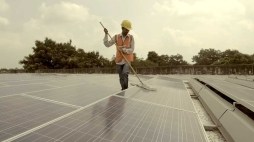 in one of India’s most remote tribal areas—a place so isolated that it’s not just off the power grid, it’s also absent from most maps. She and her community, the Asur tribe, are based in the eastern state of Jharkhand. Nearly half of the people in this isolated territory lack access to electricity—the highest percentage of any state in India.
So when Azure Power, a private solar provider and longstanding IFC client, won a contract to bring power to 320 households in 11 mud-brick villages scattered across the state, the first item of business was to locate these communities. Engineers spent a week driving and trekking through waterlogged jungle to identify the coordinates of each village—including Sarita Asur’s. Next, Azure Power arranged to transport the equipment (including 450-pound batteries) on the narrow, unpaved roads of one of India’s poorest regions. Continue reading
Make it convenient, make it credible
We’re living in a time of disruptive technologies evolving at an exponential pace. Today,  you can enjoy an Impossible Burger (meat industry disrupted) delivered by Caviar (food delivery disrupted) to your AirBnB (hotel industry disrupted) while you’re on FaceTime (telecommunication industry disrupted) urging your teenager to get back to lessons on Khan Academy (education industry disrupted). And all the while, you’re leaving a trail of digital data points.
Bracing for climate change – a matter of survival for the Maldives
For low-lying island states, the impacts of global warming and climate change can be a  matter of survival. The irony is that while these states have not contributed much to greenhouse emissions, as they produce very little, they may face some of the worst consequences. The Maldives is no stranger to the risks from climate change. It is already witnessing an increase in intense rainfall and resultant flooding, cyclonic winds and storm surges. As one of the lowest-lying countries in the world, with all its people living a few meters above sea level and over two thirds of its critical infrastructure lying within 100 meters of the shoreline, a sea level rise of just a few meters will put the nation further at risk, endangering its relative prosperity.
World Bank Group Announces $50 billion over Five Years for Climate Adaptation and Resilience
WASHINGTON, January 15, 2019 – The World Bank Group today launched its Action  Plan on Climate Change Adaptation and Resilience. Under the plan, the World Bank Group will ramp up direct adaptation climate finance to reach $50 billion over FY21–25. This financing level—an average of $10 billion a year—is more than double what was achieved during FY15-18. The World Bank Group will also pilot new approaches to increasing private finance for adaptation and resilience.
Views from Silicon Valley: Helping client countries keep up with changing technology
It is time to tell you a secret my friends. I am a girl who codes. Before joining the World Bank, I was fluent in ASCII, developing systems and applications to make it easier to get things done.
Nearly 20 years after writing my first lines of code, I stepped onto the Microsoft Campus in Redmond, Washington, representing the World Bank Governance Global Practice and the GovTech Global Partnership task team. Along with a delegation representing leadership across the Bank, we visited Redmond and Silicon Valley to meet with some of the top players in Big Tech.
Competition and the rise of the machines: Should the AI industry be regulated?
A multinational conglomerate uses artificial intelligence (AI) algorithms to gather  intelligence about the news you peruse, social media activity, and shopping preferences. They choose the ads you passively consume on your newsfeed and throughout your social media accounts, your internet searches, and even the music you hear, creating an incrementally increasingly customized version of reality specifically for you. Your days are subtly influenced by marketers, behavioral scientists, and mathematicians armed with cloud supercomputers. All of this is done in the name of maximizing profit to influence what you’re thinking, buying, and whom you will be electing…
 Netherlands for the World Bank
You must be logged in to post a comment.