
The Russian invasion of Ukraine threatens the uneven recovery of developing East Asia and Pacific (EAP) countries. The invasion comes on top of the economic distress caused by the lingering COVID-19 pandemic, the financial tightening in the United States, and the pandemic resurgence and the economic slowdown in China. While commodity producers and fiscally solid countries in the region may weather these shocks with less difficulty, these events will dampen the growth prospects of most economies in the region. Overall economic growth is projected to slow to 5 percent in 2022— 0.4 of a percentage point less than expected in October. If global conditions worsen and national policy responses are weak, growth could ease further.
Continue readingAuthor Archives: NL4WorldBank

WBG Procurement Opportunities
Interested in Doing Business with the World Bank Group? Please see selected opportunities below.
Procurement Framework and Regulations for Projects After July 1, 2016 (worldbank.org)
Are we ready for the coming spate of debt crises?

Higher inflation. Slower growth. Tightening financial conditions.
In recent weeks, Russia’s invasion of Ukraine has exacerbated global economic risks. There is a fourth element, however, that could make the mix combustible: the high debt of emerging markets and developing economies.
Continue readingeC2: Prioritizing Resilient Investments for Water Security in Botswana
Deadline: 25-Apr-2022 at 11:59:59 PM (Eastern Time – Washington D.C.)
The main objective of this assignment is to develop a national and transboundary water resilient strategy for Botswana. This study will quantitatively assess the climate change risks of water resources management and development alternatives vis-à-vis other identified risks unrelated to such change. The study will include a roadmap for a phased adaptation leading to increased multi-dimensional resilience of the Botswana water resources system using Decision-Making Under Uncertainty Methodologies (DMDU). The assessment will evaluate tradeoffs across in-country water management and services investments as well as the three transboundary options (Chobe-Zambezi transfer, Lesotho-Botswana transfer, and desalination from Namibia). See detailed file with request for expression of interest.
Addressing Challenges to Growth, Security, and Stability
In his speech, “Addressing Challenges to Growth, Security, and Stability,” President Malpass will discuss how conflict, COVID-19, and climate change have created unprecedented challenges for developing countries, hurting the poorest and most vulnerable people and communities. He will outline how, moving forward, crisis recovery and longer-term development requires economic transformation, investment in human capital, and security and stability underpinned by support from the international community.
This speech will be broadcast live from Poland, a country that has taken in over 2.3 million Ukrainian refugees fleeing war.
Watch the World Bank Group Public Events
Visit the Official Spring Meetings 2022 website
Visit the World Bank Group website
Is there a best way to target social assistance?
Social protection programs help individuals and families escape poverty, mitigate and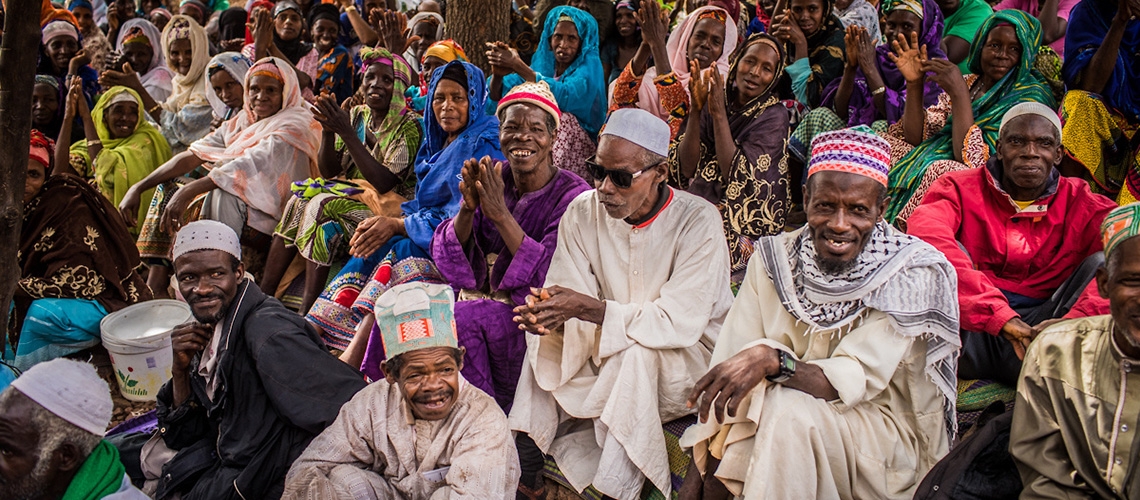 manage risks, and improve resilience and opportunity. Yet, most countries have limited resources for social protection interventions. Prioritizing populations most in need therefore becomes necessary and important.
eC2: Study on climate smart agriculture technologies and investment opportunities
Deadline:21-Apr-2022 at 11:59:59 PM (Eastern Time – Washington D.C.) 
The objective of this assignment is to provide a toolkit for women regarding nature based solutions that the Donor Committee for Enterprise Development’s (DCED) Green Growth Working Group. The toolkit should support the development and growing market demand for affordable, gender-responsive, nature-based solutions for climate change mitigation and adaptation and biodiversity in developing countries, and that women as entrepreneurs, business owners, workers and supply-chain actors – are particularly well positioned to help address this need.
eC2: Study on climate smart agriculture technologies and investment opportunities
Deadline: 19-Apr-2022 at 11:59:59 PM (Eastern Time – Washington D.C.) 
The Government of South Africa has identified agriculture as one of the key sectors that could contribute to greening the economy due to its backward and forward linkages with job generation, food security, foreign export earnings and raw material production, making the sector an important engine for the growth of the rest of the economy. At the same time, this potential is significantly threatened by climate change . With more than 70 percent of its croplands relying primarily on rainfall for farming, existing cropping and livestock systems will be directly affected by expected climate induced changes in precipitation and temperature patterns. The agricultural sector is therefore one of the focal sectors of South Africas National Climate Change Adaptation Strategy (NCCAS) that was promulgated in 2020 and of the countrys updated Nationally Determined Contribution (NDC) under the Paris Agreement . The adoption of climate smart agriculture technologies provides opportunities for sustainable intensification consistent with food security and development goals, and climate change adaptation and mitigation needs.
WBG Procurement Opportunities
Interested in Doing Business with the World Bank Group? Please see selected opportunities below.
Procurement Framework and Regulations for Projects After July 1, 2016 (worldbank.org)
Four paths to respond to the food price crisis
As the devastating war in Ukraine rages on causing untold suffering, its impact is being felt far beyond its borders, battering a world emerging from a pandemic that has hit developing countries hardest. Among the most critical is the food price crisis, calling into question the affordability and availability of wheat and other essential staples.
There is no downplaying the blow that the war has dealt to food systems, already fragile from two years of COVID-19 disruptions, climate extremes, currency devaluations, and worsening fiscal constraints. , not only wheat but barley, maize, and edible oil among others exported by these two countries. Global and domestic food prices were already close to all-time highs before the war, and a large question mark looms over the next seasons’ harvests worldwide due to the sharp increase in fertilizer prices as well.
“Whether we succeed in managing food price volatility and navigating our way out of this new crisis depends on national policies and global cooperation.”
 Netherlands for the World Bank
You must be logged in to post a comment.