Developing countries and the international community can take steps now to hasten recovery after the worst of the health crisis has passed, according to analytical chapters released from our latest Global Economic Prospects report. Securing core public services, getting money directly to people, and maintaining the private sector will limit the harm and help prepare for recovery.
Tag Archives: Indonesia
eC2: End-of-Term Review of IFC Agribusiness Program Indonesia
Deadline: 13-Feb-2020 at 11:59:59 PM (Eastern Time – Washington D.C.) 
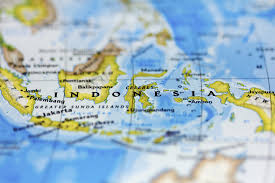
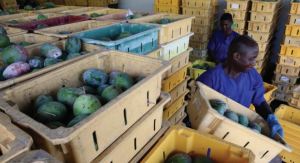
The IFC Indonesia Agribusiness Program (the program) aims to promote inclusive and sustainable rural growth in Indonesia. It does this through the following three objectives: (i) Increase the income of smallholder farmers from sustainable agricultural production; (ii) Increase gender-responsive investments in agriculture and rural communities; and (iii) Increase demand for sustainably produced agricultural commodities.
eC2: Advisory Services to the Indonesia Coastal Fisheries Initiative
Deadline: 10-Feb-2020 at 11:59:59 PM (Eastern Time – Washington D.C.) 
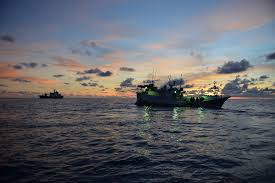
The objective of this consultancy is to identify: (1) main barriers a) for the participation of the private sector in sustainable fisheries and b) for the establishment of community private sector partnerships around sustainable fisheries; (2) advise on ways to address these barriers; and (3) present a concrete business case of return-seeking responsible investments in a specific target fishery, that incorporates the advice above, and thus informs understanding of fisheries investment risks and opportunities.
eC2: Sector Impact Assessment of Subnational Infrastructure Investments in Indonesia
Deadline: 13-Nov-2019 at 11:59:59 PM (Eastern Time – Washington D.C.)
Consultant firm to provide support to the World Bank team in conducting the detailed regional impact analysis for several projects financed through RIDF and/or municipal bonds. The consultant firm will also prepare a guidance note on the analysis and conduct series of trainings to the relevant stakeholders.
eC2: Baseline Study and Analytics on Systems Readiness and Stakeholder Capacity for an End-to-End Multi-Hazard Early Warning System Platform.
Deadline: 18-Nov-2019 at 11:59:59 PM (Eastern Time – Washington D.C.) 
The goal of this study is to provide advisory services and technical inputs to inform the detailed design of a multi-hazard early warning system platform in Indonesia. This will be achieved through a baseline survey and analysis on multi-hazard monitoring and early warning systems, preparedness and emergency management capabilities at the national and sub-national level (in at least 8 districts), and early warning information needs and multi-stakeholder needs for early actions. The Consultant will also facilitate national-level verification consultations (including a workshop) and capacity building activities for government officials from the select districts and at the central level.
eC2: Strengthening Resilience in Road Transport Infrastructure in Indonesia
Deadline: 18-Nov-2019 at 11:59:59 PM (Eastern Time – Washington D.C.)

The main objective of this activity, financed by the mentioned grant, is guiding the Directorate General of Highways (DGH) towards achieving long-term climate-resilient road and bridge infrastructure in Indonesia. The key actions that will help to achieve this goal are to: (i) review selected road and bridge existing manuals and guidelines on, among others, disaster risk management and slope protection, stabilization, and erosion; (ii) advice and provide technical inputs to enhance such documents; (iii) develop a set of communication materials to raise awareness of good practice; and (iv) provide technical assistance to DGH to increase their capacity.
Empowering Frontlines, Leveraging Technology: Basic Service Delivery in 21st century Indonesia
Summer may almost be over in Washington D.C. but in Indonesia, it’s summer all year
round. It’s Southeast Asia’s biggest economy, boasts the world’s fourth largest population with an archipelago of thousands of tropical islands. Its cultural heritage dates back millennia, and in keeping with the digital wave sweeping the globe, is also home to four unicorns that are leveraging technology to create jobs and improve livelihoods.
Time to ACT! Realizing Indonesia’s urban potential
Indonesia has been transformed by urbanization. As a new World Bank report titled
Time to ACT: Realizing Indonesia’s Urban Potential shows, when its independence was proclaimed in 1945, only one in eight Indonesians lived in towns and cities, and the country’s entire urban population stood at about 8.6 million, roughly that of London today. By contrast, today about 151 million, or 56% of Indonesians live in urban areas, roughly 18 times the population of London.
eC2: Indonesia Coastal Fisheries Initiative – Challenge Fund
Deadline: 15-Oct-2019 at 11:59:59 PM (Eastern Time – Washington D.C.)
The Indonesia CFI-CF Project aims to support the development of a fisheries investment package by a coalition of community, government, and businesses, and support finding an investor for the resulting investment package. One promising idea will be selected through a competitive process and awarded a contract for the development of the package. The World Bank will oversee the activities of the awardee, review project outputs, and provide guidance on analyses for ensuring that the investment package is robust (described further below).
eC2: Indonesia Coastal Fisheries Initiative – Challenge Fund
Deadline: 08-Oct-2019 at 11:59:59 PM (Eastern Time – Washington D.C.) 
Specifically, by time of close, the contracted organization will have:
1) Developed an investment package, a report outlining a set of well-defined investment project proposals;
2) Completed a series of analysis to validate the technical, legal, and social feasibility of the proposed investments; including estimates of the financial return from undertaking the investments, and appraisal of social and environmental impacts as well as their mitigation measures (using the World Bank’s Environmental and Social Framework);
3) Conducted concrete preparatory actions that increase the chance of success (or reduce the risks) of the proposed fishery investment package, such as capacity-building of stakeholders, strategy development, or certification audits, in preparation for the implementation of activities in the proposed investment package;
4) Have in-principle agreements with potential investors and donors to undertake the financing of the project proposals.

You must be logged in to post a comment.