
Next week, the Annual Meetings of the World Bank Group and the International Monetary Fund (IMF) take place from upcoming October 10 to October 14 in Washington DC. During this meetings the Board of Governs of the attentive organizations will debate in the field of topics associated with poverty reduction, international economic development and finance.

In order to make these meetings accessible for the wide audience, World bank Live will daily stream several events in different languages such as English, Spanish, French and Arabic. The subjects of the Flagship events of the Annual Meetings vary from Human Capital Summit to digital economy and education. If you are interested within accompany the dialogues through the broadcast of Worldbank live, check out the whole program here and join the World Bank’s Live online event. You are also able to submit questions before the events. Below you will find a short selection of these upcoming events concurrently with the Annual Meetings 2017.

 their full development potential. Faced with this challenge, governments and donors across the globe have turned to early childhood education and development (ECED) services. These are a cost-effective way to overcome the developmental losses associated with growing up in a disadvantaged environment. The services can be delivered in different ways, such as through kindergartens and community-based playgroups.
 unprecedented enrollment rates. Yet, even with these historic investments, children sit in classrooms every day without learning. More than a schooling crisis, we face a learning crisis. Despite progress in countries as diverse as Vietnam, Colombia and Peru, millions of children leave school without knowing how to read a paragraph or solve a simple two-digit subtraction.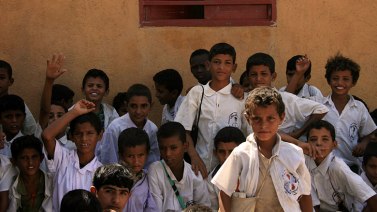
 gifted?” A gap like this—in perceptions and expectations—is not new. Myths about ‘gendered’ learning gaps have persisted since at least the
  designed to better help workers adapt to new jobs being created by the internet if they want to avoid increasing inequality and exclusion in the region, notes a new World Bank Report. According to


You must be logged in to post a comment.