Regulation exists to protect workers, public safety, businesses, and investments. But
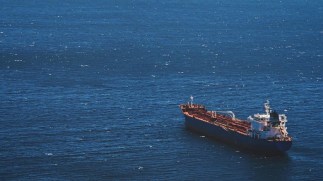
inefficient or inadequate regulation can stifle entrepreneurial activity and business growth and impact the ease of doing business. It takes over 200 hours to complete export border requirements for maritime transport in Cameroon and Côte d’Ivoire. In contrast, it takes only 10 hours in Singapore. Border compliance costs for export at seaports in Gabon average over $1,600, but just over $300 in Mauritius.
eC2: Trade Facilitation West Africa Communications and Awareness
Deadline: 11-Nov-2019 at 11:59:59 PM (Eastern Time – Washington D.C.) 
Develop an informed, regionally effective communications strategy and tactical plan (in writing) by: Researching and mapping which tactics are the most suitable for the market/region/audience. Organizing and facilitating meetings and/or workshops between TFWA Program communications focal points and representatives of various institutions with an interest in the regions trade facilitation agenda to inform its approach. Ensuring the strategy and plan incorporate priorities of the various TFWA Program stakeholders while also ensuring consistency with TFWA Program objectives, targets, and communications guidelines and graphic standards. Seek approval for the above strategy and plan and rework the approach as needed.
Execute the approved tactics to Bank-level standards.
Provide ECOWAS/UEMOA with the tools required to take over and implement the communications plan in the long term.
Produce progress reports at agreed intervals (per each task order).
How Statistical Capacity Building projects benefited Sudan
The Trust Fund for Statistical Capacity Building (TFSCB) Administrative Unit at the
Development Economic Data Group (DECDG) launched a new blog series “TFSCB: Statistics for a Better World” earlier this year to share the impacts of the World Bank’s TFSCB in low- and mid-income countries over the last 20 years.
One of the projects that benefited from the TFSCB was the Sudan Statistical Capacity Building project.
Empowering Frontlines, Leveraging Technology: Basic Service Delivery in 21st century Indonesia
Summer may almost be over in Washington D.C. but in Indonesia, it’s summer all year
round. It’s Southeast Asia’s biggest economy, boasts the world’s fourth largest population with an archipelago of thousands of tropical islands. Its cultural heritage dates back millennia, and in keeping with the digital wave sweeping the globe, is also home to four unicorns that are leveraging technology to create jobs and improve livelihoods.
eC2: Acceleration Services for AG Tech Project in Vietnam
Deadline: 29-Oct-2019 at 11:59:59 PM (Eastern Time – Washington D.C.)
As part of its efforts to build its leadership in providing access to ag tech solutions to smallholder farmers that help improve their overall agricultural production practices and sustainability, IFCs Ag Tech Vietnam project aims to: 1) develop and apply ag tech innovations in up to 3 crops in Vietnam to inform precise farming response resulting in reduced input use and costs; and 2) roll out a commercially viable model for smallholder farmers usage of Ag Tech services and achieve scale.
2019 Annual Meetings Live- Recap
Staying focused on better outcomes for the world’s poorest people
Global growth remains subdued, with the pace of investment and trade softening, and
downside risks persisting due to policy uncertainty, trade tensions, financial volatility, and rising debt. The World Bank Group, in cooperation with the International Monetary Fund, can help emerging and low-income countries bolster potential growth, increase their resilience to shocks, boost domestic revenues, and continue building policy buffers. The two organizations have an important role to play in addressing the increase in debt vulnerabilities, and they can help countries meet a range of challenges to the international financial system, including tackling corruption.
Study tour to the Netherlands offers new insights on nature-based solutions
and Romania came to the Netherlands for a World Bank study tour on nature-based solutions organized by the Netherlands Water Partnership. One of the participants was Ivane Vashakmadze, Tourism Expert and World Bank Consultant from Georgia. In his blog, he shares his experiences and his lessons learnt on nature-based solutions.eC2: Chemical status assessment methodology reflecting the impacts of the climate changes on the status of surface water including analysis of chemical pressure, impacts, risks and status
Deadline: 31-Oct-2019 at 11:59:59 PM (Eastern Time – Washington D.C.)

The assignment envisages five main activities as follows: Activity 1. Pressure and impact analysis taking into account new priority pollutants included in Directive 2013/39/EC and new industrial activities. Activity 2. Chemical Status assessment methodology Activity 3: Training of experts from River Basin Directorates (RBDs) on the application of developed methodology for chemical status assessment. Activity 4. Assessment of chemical status of water bodies in the country based on defined background concentrations, refined methodologies for chemical status assessment and available results. Activity 5. Proposal for new monitoring programs including new monitoring points and pollutants for measurement. Critical evaluation of concentration of pollutants that has never been introduced in the country and never measured above EQS and proposal for their elimination from monitoring programs.
eC2: Consultancy Services for Water Supply and Sanitation (WSS) Policy, Institutions, and Regulation Assessments
Deadline: 30-Oct-2019 at 11:59:59 PM (Eastern Time – Washington D.C.) 
The scope of the consultancy services shall include but not be limited to the following:
i. Analyze the role of PIR in achieving better water and sanitation outcomes e.g. in terms of access, quality of services, resilience, inclusion, efficiency and sustainability to name just a few. The challenges and opportunities for doing so will be highly country-specific and the objective of this work is to anchor the diagnostic and reform proposals in those local contexts. The diagnostic should also develop evidence on how PIR is supporting or undermining progress in desired WSS outcomes. ii. Prepare an action plan for addressing the challenges identified in the diagnostic. Propose a menu of activities for each country that directly address the PIR weaknesses and leverages reform opportunities. iii. Develop key messages and communication products based on the country assessments: Draw out key messages, lessons, and insights that could be relevant for a global PIR agenda. Develop presentations, blogs and briefs and other communication materials to disseminate findings and advocate for more attention on PIR at national and international fora.

You must be logged in to post a comment.