
COP26 helped focus global attention on the challenge of transitioning out of coal. In recent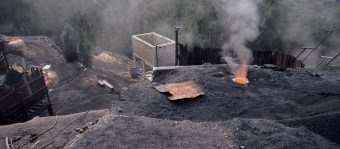 months, however, the war in Ukraine has led to a rise in coal use, as a short-term replacement of Russian oil and gas. But in the medium term, both advanced and developing economies will need to accelerate the coal transition to meet Paris Agreement targets. Decisive actions and financial resources are essential, but success will ultimately depend on effective policies to deal with the resulting disruption to jobs, reflected in the call for a “just transition.”
Category Archives: WBG News & Reports
COVID vaccines: Why we must succeed in every country
The COVID-19 pandemic is far from over, and vaccines remain our most important tool for 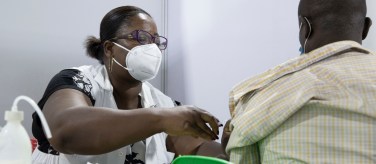 helping every country overcome it and get on the path to recovery.
Since February, much of the world’s attention has shifted to Russia’s invasion of Ukraine and the risks it poses to global supplies of food and energy. And the war is coming on top of many other crises – climate change, conflict in many other places, record numbers of refugees, and a rise in poverty for the first time in decades. But even among these daunting global challenges,
Commodity Markets: Evolution, Challenges, and Policies
The past two years of the global pandemic profoundly impacted our societies and economies.  The COVID crisis heightened the need for multilateralism to tackle global challenges.
Even as the worst of the pandemic starts to recede, the war in Ukraine threatens to impact global development outcomes. At the same time, climate impacts continue to mount. to avoid fundamentally altering our planet’s climate and its irreversible impacts on development. We must take bold and swift action and we must do so now to ensure that we can realize green, resilient and inclusive development.
World Bank Live
World Bank Live is the World Bank’s digital platform for live-streaming and engaging with global audiences in open and two-way conversations about international development.
Since 2013, World Bank Live has hosted over 700 public events in four languages: English, Spanish, French, and Arabic.
Panel discussions and high-level events are live-streamed during the Spring and Annual Meetings and throughout the year. International audiences can attend report launches, roundtables, speeches from senior management and global leaders, and join global conversations on key development topics such as climate change, economic recovery, debt management, digital transformation, sustainable development, and much more.
Each event is covered live by international development experts from the World Bank and partner organizations, taking questions from the audience in real-time and sharing research findings and learning resources.
Digital improvements can make or break ports
If you have made any major purchases in the last two years, it’s likely that you have personally 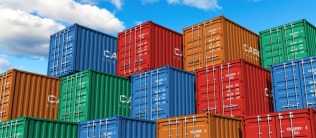 felt the impact of the global supply chain crisis. Pandemic-induced spikes in consumer sales and labor shortages triggered artery-clogging nightmares for some of the world’s busiest ports. At the most serious end of the spectrum, this has contributed to food shortages. But maritime backlogs can delay the delivery of everything ranging from clothes to couches to cars.
Air pollution kills – Evidence from a global analysis of exposure and poverty
Globally, poor air quality is estimated to cause some 7 million deaths each year, as it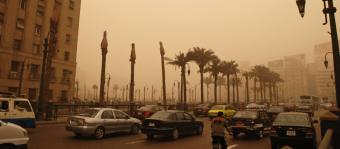 increases the risk of a wide range of cardiovascular and respiratory diseases. Yet the exposure to and impact of air pollution are not equally distributed. Air pollution is particularly prevalent in industrializing developing economies. Less stringent air quality regulations, the prevalence of older polluting machinery and vehicles, subsidized fossil fuels, congested urban transport systems, rapidly developing industrial sectors, and cut-and-burn practices in agriculture are all contributing to heightened pollution levels. The lack of affordable quality healthcare services further increases air pollution related mortality.
Commodity Markets: Evolution, Challenges, and Policies
Commodity markets are integral to the global economy. Understanding what drives developments of these markets is critical to the design of policy frameworks that facilitate the economic objectives of sustainable growth, inflation stability, poverty reduction, food security, and the mitigation of climate change. This study is the first comprehensive analysis examining market and policy developments for all commodity groups, including energy, metals, and agriculture, over the past century. It finds that, while the quantity of commodities consumed has risen enormously, driven by population and income growth, the relative importance of commodities has shifted over time, as technological innovation created new uses for some materials and facilitated substitution among commodities. The study also shows that commodity markets are heterogeneous in terms of their drivers, price behavior, and macroeconomic impact on emerging markets and developing economies, and that the relationship between economic growth and commodity demand varies widely across countries, depending on their stage of economic development. Policy frameworks that enable countercyclical macroeconomic responses have become increasingly common—and beneficial. Other policy tools have had mixed outcomes.
Tracking government debt is hard. Banishing secrecy clauses would make it far easier.
With a few taps on a smartphone, I can check the weather, send messages to friends around the world, review my bank account, or even order food. But even in our hyper-connected, data-driven world, it’s exceedingly difficult to pin down government debt – even for researchers with advanced skills and access to big databases. And that’s not for lack of trying.
Such was the case in 2016, when the revelation of previously undisclosed debt derailed Mozambique’s development agenda, tainted its reputation as a growth and investment star, and sent its financial sector into crisis. More recently, Chad and Zambia’s debt restructuring negotiations were delayed when their respective debt offices couldn’t produce current and complete records of what was owed (and to whom).
A Conversation with David Malpass and Masood Ahmed

On May 26th 2022, World Bank Group’s President, David Malpass, and Masood Ahmed, President of the Center for Global Development, will hold a conversation about the array of global shocks, their impact on the most vulnerable communities—and the response they urgently demand.
From conflict to COVID to climate change, overlapping crises have created unprecedented challenges for developing countries. Debt vulnerabilities, rising inflation, higher energy prices and food insecurity are threatening to reverse development gains. These growing challenges require decisive policy action and sustained international cooperation on multiple fronts to ensure economic conditions improve in all countries, especially the poorest. David Malpass and Masood Ahmed will exchange views on macroeconomic and political instability; and what is required for economic transformation.
The Way Forward is an occasional series of in-depth discussions on development challenges and innovative solutions, hosted by World Bank Group David Malpass.
May 26th, 10:00 AM EDT (local time)
Doing Business with the World Bank. Corporate Procurement | Free Webinar
📅 26 May 2022 🕟 4 PM (Brussels)/ 10 AM (Washington DC)
Virtual
DevelopmentAid, in collaboration with the World Bank Group, invites organizations and individual experts working in the development sector to join the webinar on “Doing Business with the World Bank. Corporate Procurement” to learn more about aspects of WB’s corporate procurement and discover ways to achieve successful collaboration.
 Netherlands for the World Bank
You must be logged in to post a comment.