
Category Archives: WBG News & Reports
Nutrition: The key to achieve Universal Health Coverage and unleash Human Capital
This blog is part of a series on Universal Health Coverage (UHC). The series 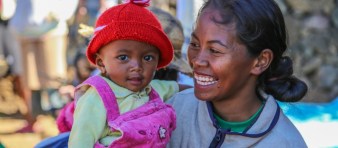 includes contributions from external bloggers and reflects their views. Follow the conversation on Twitter #healthforall.
Understanding the new rurality in Latin America: how can we respond to it in the water sector?
As development practitioners, a common mistake we may fall into is devising well-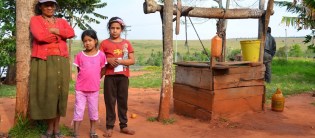 intentioned solutions based on an “outdated” understanding of the country or sectoral context.
In the previous blog, we discussed the water supply and sanitation (WSS) sector challenges which are persistently looming over rural areas in Latin America and the Caribbean (LAC). In this piece, we continue to sketch the “new rurality” by considering new trends and developments witnessed which are altering the rural landscape—and which may require new or revised sector reforms to achieve the Sustainable Development Goal 6.
The Future of Work in Africa: Making Productive Investments for More and Better Jobs
There are uncertainties and misconceptions about the impact of digital technologies on the future of work. Will robots replace humans in the work place? Will digital technologies create a new “digital divide” and widen inequalities between the higher-educated connected and lower-educated unconnected people? Will new opportunities open up for African countries to create jobs, improve incomes, reduce poverty and climb up the development ladder?
IMF Reports World Economic Outlook, July 2019
 till Sluggish Global Growth
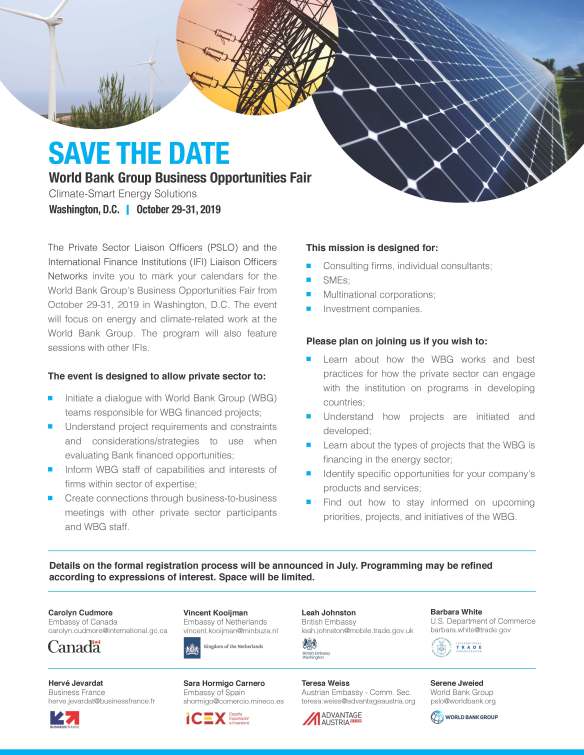
Save the Date:Climate-Smart Energy Solutions Business Opportunities Fair
Image
Making a better poverty map
The digital economy is transforming how data is collected, processed and used for  evidence-based decisions to monitor and achieve the Sustainable Development Goals. Promising new methods that combine traditional household survey data with non-traditional data sources (such as mobile phone data, satellite data and text data) are creating opportunities to map poverty at a higher resolution and scale. Nonetheless, significant technical, practical and ethical challenges still hamper the operationalization of these methods.
“The careful combination of ground truth surveys with an abundance of big data increases—not decreases—the value of surveys.”
Understanding the “new rurality” in Latin America and what it means to the water and sanitation sector
Despite the urbanization trends seen in Latin American and Caribbean (LAC), it seems 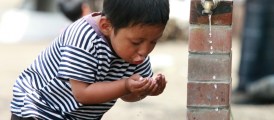 that the rural population in LAC is decreasing in relative terms. In 2001, official figures indicated that 125 million people in LAC resided in rural areas representing 24% of the total LAC population. In 2013, this value decreased to 21% (130 million out of a total population of 609 million inhabitants), and it is estimated that by 2030, the rural population will decrease to represent 16.5% of the total (CEPAL, 2014).
New country classifications by income level: 2019-2020
Updated country income classifications for the World Bank’s 2020 fiscal year are available  here.
here.
The World Bank classifies the world’s economies into four income groups — high, upper-middle, lower-middle, and low. We base this assignment on Gross National Income (GNI) per capita (current US$) calculated using the Atlas method. The classification is updated each year on July 1st.
Save the Date: Climate-Smart Energy Solutions Business Opportunities Fair
Image
 Netherlands for the World Bank
You must be logged in to post a comment.