Unknown's avatar

About NL4WorldBank

The World Bank Team at the Royal Netherlands Embassy tweets about news related to Dutch organizations interested in working with the #WorldBank. #NL4WorldBank

Empowering Women Through Tourism

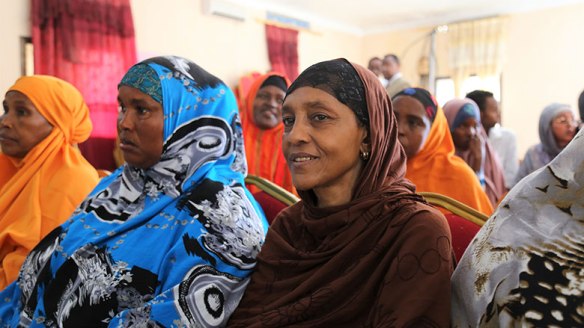
The Middle East and North Africa (MENA) region has some of the most important historical and cultural sites in the world, and stunning natural landscapes. Couple these incredible assets with the region’s famous hospitality and rich culinary traditions, MENA is an ideal destination to grow travel and tourism, and harness its power for development work. However, MENA is behind other regions in women’s agency, economic opportunities, workforce participation and more. This presents a unique opportunity to leverage tourism to bridge the gender gap in the region. Gender differences in unemployment rates are particularly exacerbated in the West Bank and Gaza, where the overall economic situation is bleak due to instability, and gender dynamics are and exacerbated by the conflict.

Continue reading

eC2:Data collection for an energy efficiency and renewable energy assessment for an agri processor in Malawi

Renewable-energyDeadline: 17-Jan-2018 at 11:59:59 PM (Eastern Time – Washington D.C.)

Objective:  The Consultant is expected to perform data collection by installing onsite metering devices and recording the readings over the period of several weeks. The data items will include overall electric demand and consumption at the level of a building/workshop, as well as for key individual units of equipment. The Consultant will measure the power output and supply from various sources, including the local power grid and diesel generators. The Consultant is also expected to measure solar irradiation at the company’s premises, as required to evaluate ground-mounted and rooftop solar power solutions Continue reading

Innovation in the air: using cable cars for urban transport

1 NbKnQKS58pvtrmV7xrLbywInvented over a century ago for exploring mountainous regions, aerial cable cars have recently made an appearance in several big cities, where they are being used as an alternative to conventional urban transport modes. This technology uses electrically-propelled steel cables to move suspended cars (or cabins) between terminals at different elevation points.

The tipping point. The emergence of cable cars in urban transport is fairly new. Medellín, Colombia pioneered the use of cable cars for urban transport when it opened its first “Metrocable” line in 2004. Since then, urban cable cars have grown in popularity around the world, with recent projects in Latin America (Rio de Janeiro, Caracas, Guayaquil, Santo Domingo, La Paz, and Medellín), Asia (Yeosu, South Korea, Taiwan, Hong Kong), Africa (Lagos, Constantine), and Europe (London, Koblenz, Bolzano). Cable cars can be an attractive urban transport solution to connect communities together when geographical barriers such as hills and rivers make other modes infeasible.

Continue reading

Green Buildings Specialist

Deadline: 22-Jan-2018 at 11:59:59 PM (Eastern Time – Washington D.C.)

Objective: The Green Buildings India program is a key component of IFCs cities initiative. It aims to champion voluntary uptake of resource-efficient buildings given that more than 70% of the buildings that will exist in India in 2030 have yet to be built. IFC is currently recruiting a senior-level short-term consultant (STC) for managing and executing key activities under its comprehensive Green Buildings India Program.

Continue reading

Disaster Risk Management (DRM) Training for Government Counterparts

Deadline: 15-Jan-2018 at 11:59:59 PM (Eastern Time – Washington D.C.)

Objective: Under the auspices of the Citizens’ Charter Afghanistan Project National afganistan1Priority Program, the World Bank Group has been providing training to the Ministry of Rural Rehabilitation and Development (MRRD) and the Independent Directorate of Local Governance (IDLG) on disaster risk management to ensure resilient community infrastructure, greater sustainability in investments as well as more resilient communities. Based on the positive results achieved to date, there is increasing demand to expand these training efforts and train a broader set of key government stakeholders on best disaster risk management practices to increase resilience of public investments in Afghanistan.

Continue reading

Technical Consultant Yangon Elevated Expressway PPP Project

Deadline: 22-Jan-2018 at 11:59:59 PM (Eastern Time – Washington D.C.)

Objective: IFC is being retained by the Ministry of Construction (MoC) of the Government of Myanmar (GoM) to advise on the structuring and tendering of a PPP for a 20.5 km four lane, north-south elevated toll road expressway for Yangon, Myanmar. The expressway is proposed to be implemented on an elevated viaduct above existing roadways to connect Yangon’s CBD in the south with the Yangon Industrial Park in the north. The expressway will also provide a link to Yangon International Airport.

Yangon0210

Continue reading

Top 7 water blogs of 2017

As a new year of insightful and interesting blogs begins here, we celebrate some of the most popular entries on The Water Blog from 2017.  Thanks to our readers and bloggers, The Water Blog is growing every year. From global, to regional, to national, and local perspectives, and covering key themes that resonate with a diverse community, we strive to ensure our content makes an important contribution to the global dialogue on water issues, and offers readers fresh insights as well as vital resources they otherwise may have not known about.

Continue reading

Equality Means Business: Making the Business Case for Women

Despite women’s active role in Zimbabwe’s informal sector, they are underrepresented in its formal business sector.  When early December was upon us—heralding the start of the month of annual festivities—a group of women executives met to put forward strategies for equality in business. They met against a background of the harsh reality of women’s exclusion from leadership positions in Zimbabwe, brought to the fore in a recently released Confederation of Zimbabwe Industries (CZI) Manufacturing Survey for 2017.

Continue reading

Protecting Watersheds Through an Innovative Learning App

Watershed protection is a complex challenge that needs a multi-sectorial approach. Innovative and interactive tools, such as the new World Bank Spatial Agent app, is one solution, according to Nagaraja Rao Harshadeep, a Global Lead for Watersheds with the Bank’s Environment and Natural Resources Global Practice.Harshadeep, also the leader of the Spatial Agent app team, believes the app’s interactive maps and charts can help to us explore multi-sectoral synergies in a spatial development context. The data can promote collaborative efforts for sustainable and environmentally sound watershed management.

Continue reading

Cities: 12 big moments of building sustainable cities and communities (#7-#12)

At the World Bank, our teams working on social development, urban development, disaster risk management, and land issues have endeavored with countries and cities worldwide throughout the year to achieve a common goal: building inclusive, resilient, and sustainable cities and communities for all. How did they do? From our “Sustainable Communities” newsletter, we have captured 12 moments that mark the major accomplishments and lessons learned in 2017—and inspire our continued work to end extreme poverty and boost shared prosperity in 2018. Below the last 6 moments are described.

Continue reading