

GENERAL INFO
- When: March 2-4, 2020
- Where: 1818 H St. NW, 20433 Washington, D.C.
- Contact: fragilityforum@worldbank.org
- Call for proposals: Open until November 22
- Registration for participants: Opens on November 1, 2019
The Fragility Forum is a high-level event organized by the World Bank Group which brings together practitioners and policymakers from around the world to exchange knowledge and experience on engaging in environments affected by fragility, conflict and violence (FCV). Over three days, the Forum aims to provide an opportunity to harness the collective brain trust of stakeholders coming from government, international institutions, donor agencies, private sector, civil society, academia and media to improve the efficiency and effectiveness of development approaches to achieve lasting impact. The Forum has been held three times previously, in February 2015, March 2016 and March 2018. The Fragility Forum 2020 will focus on implementation: the concrete approaches that are needed to maximize our collective impact and more effectively respond to dynamic, multidimensional, and global challenges affecting countries around the world.
 inefficient or inadequate regulation can stifle entrepreneurial activity and business growth and impact the ease of doing business. It takes over 200 hours to complete export border requirements for maritime transport in Cameroon and Côte d’Ivoire. In contrast, it takes only 10 hours in Singapore. Border compliance costs for export at seaports in Gabon average over $1,600, but just over $300 in Mauritius.
 Development Economic Data Group (DECDG) launched a new blog series
 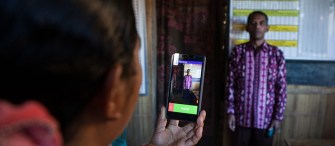 round. It’s Southeast Asia’s biggest economy, boasts the world’s fourth largest population with an archipelago of thousands of tropical islands. Its cultural heritage dates back millennia, and in keeping with the digital wave sweeping the globe, is also home to four unicorns that are leveraging technology to create jobs and improve livelihoods.

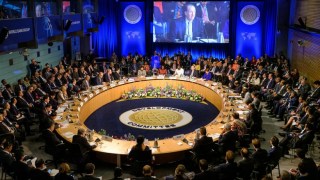 downside risks persisting due to policy uncertainty, trade tensions, financial volatility, and rising debt. The World Bank Group, in cooperation with the International Monetary Fund, can help emerging and low-income countries bolster potential growth, increase their resilience to shocks, boost domestic revenues, and continue building policy buffers. The two organizations have an important role to play in addressing the increase in debt vulnerabilities, and they can help countries meet a range of challenges to the international financial system, including tackling corruption.
 and Romania came to the Netherlands for a World Bank study tour on nature-based solutions organized by the Netherlands Water Partnership. One of the participants was Ivane Vashakmadze, Tourism Expert and World Bank Consultant from Georgia. In his blog, he shares his experiences and his lessons learnt on nature-based solutions.
 Netherlands for the World Bank
You must be logged in to post a comment.