
The Amazon rainforest is not only the world’s largest tropical forest but also a linchpin for global environmental stability and biodiversity. Its vast expanse regulates rainfall, stores immense amounts of carbon, supports biodiversity and serves as the ancestral homeland for more than 420 Indigenous Peoples and their communities. Yet, the Amazon faces mounting threats: environmental changes, rampant deforestation, and socio-economic pressures are pushing this vital ecosystem toward a tipping point.
Amazon Coverage
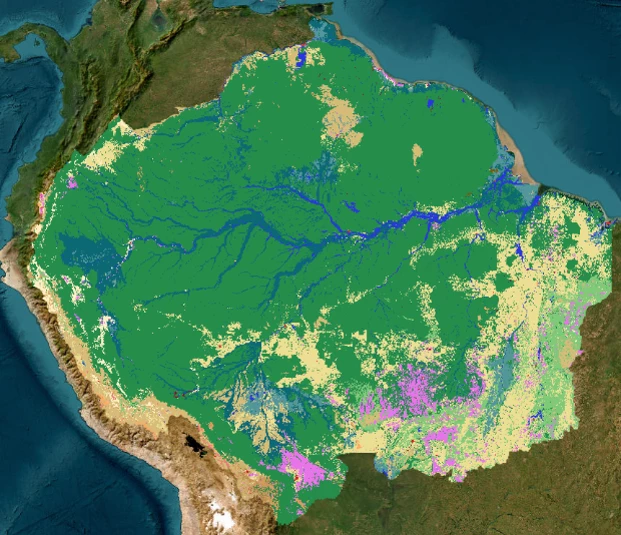
Amid these challenges, digital technologies offer transformative potential for conservation and sustainable development. However, their promise can only be realized if foundational elements-technology, internet connectivity, and data governance-are firmly in place. A new World Bank report, Advancing Amazonian Conservation through Digital Technologies, highlights how digital tools can strengthen on-the-ground conservation and sustainable development efforts in the Amazon. The report provides actionable recommendations to ensure these technologies are effectively harnessed to protect the Amazon.
Scaling Digital Technologies for Monitoring
Digital tools have supported conservation in the Amazon for several decades, and a key takeaway from the report is to prioritize what already works while thoughtfully integrating new technologies. Proven approaches, such as satellite imagery and camera traps, continue to deliver reliable, cost-effective monitoring of deforestation, wildlife, and environmental change. Yet barriers persist. High costs (often driven by import tariffs on conservation technologies), limited technical expertise, and socio-cultural challenges, including complex interfaces and the lack of legal recognition for community-collected data, still hinder wider adoption.
To address these challenges, a clear policy priority is to reduce import duties on critical conservation tools to lower costs and accelerate deployment as well as investing in local manufacturing and maintenance capabilities, involving Indigenous Peoples and Local Communities in the co-design of applications and tools, and building capacity through targeted training to ensure technologies are accessible, culturally appropriate, and relevant. With these foundations in place, advanced tools like AI powered analytics and environmental DNA (eDNA) can be layered in to strengthen near real-time tracking of deforestation, biodiversity loss, wildfires, and climate impacts. Visual data from camera traps and mobile applications, combined with AI, can detect illegal activities and predict environmental risks.
Examples of digital technologies for conservation
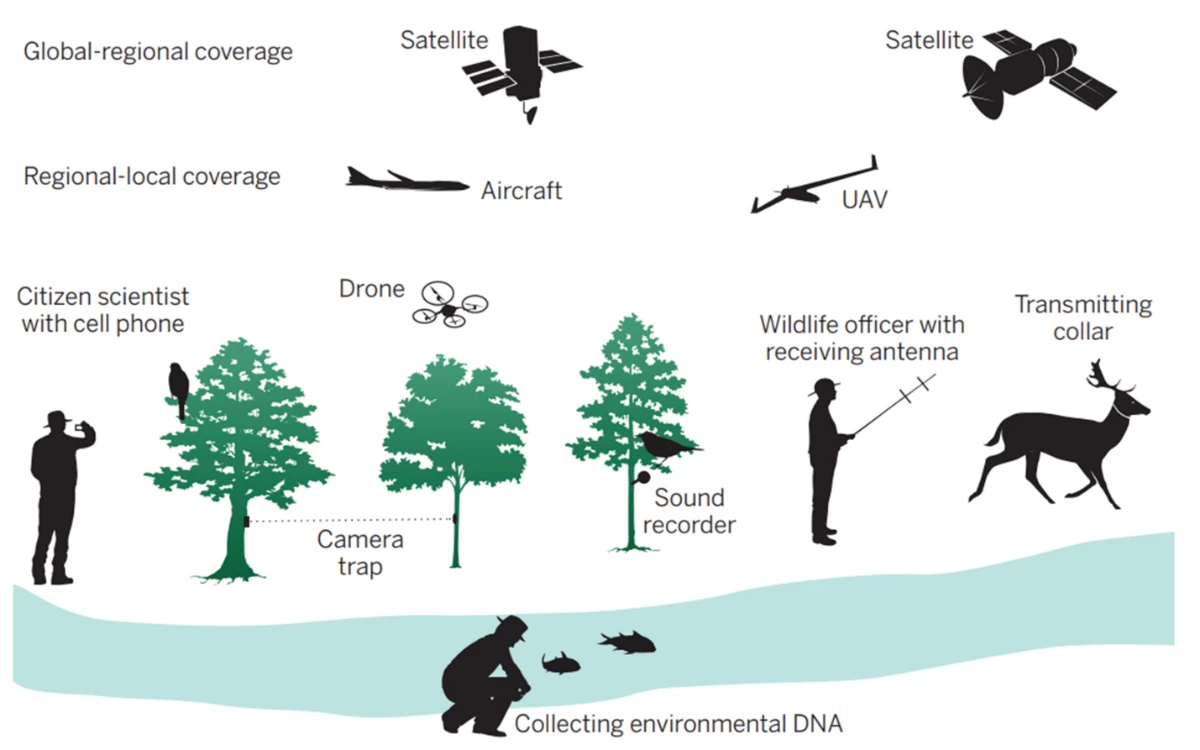
The benefits are profound such as enhanced disaster preparedness, more effective law enforcement, and the empowerment of Indigenous and local communities through participatory monitoring.
Closing the Connectivity Gap
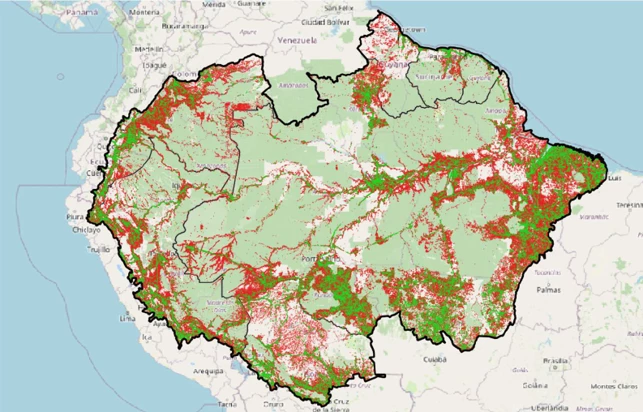
Digital conservation tools such as camera traps, drones, and IoT sensors depend on reliable internet connectivity to deliver their full value. Without robust connectivity, even the most advanced technologies cannot deliver timely data or support local action. However, according to World Bank analysis, only 3,5% of the Amazon Biome is covered by fixed or mobile broadband, a gap that is even more significant in Indigenous Territories, covered only for 0.69% of their extension. This is due to inconsistent infrastructure, high costs, and formidable geographic barriers.
Mobile and fixed broadband coverage in the Amazon
Solutions are emerging, such as regional initiatives like Brazil’s North Connected Program and Peru’s Conecta Selva, which are expanding fiber optic corridors to connect users, while satellite broadband is also being deployed to reach remote communities. In addition, Low Power Wide Area Networks (LPWAN) are primarily used for device-to-device communications and can be leveraged in areas where there is little user demand but where environmental monitoring devices are in place. A mix of these technologies, tailored to local needs, can help overcome logistical hurdles. Equally important is the promotion of community networks and digital skills training, empowering local people to maintain and operate telecommunications infrastructure.
Building Trust through Data Governance
For digital tools to drive meaningful conservation, the data they generate must be accurate, interoperable, and ethically managed. However, the Amazon’s data landscape is fragmented, with inconsistent standards and limited coordination. Restrictions to Indigenous data sovereignty and data protection further complicate the picture.
Action is needed on several fronts: developing regional data governance frameworks can harmonize standards and ensure data quality; interoperability and open data standards will facilitate collaboration and informed decision-making; most importantly, Indigenous rights and consent must be embedded in all data policies, recognizing the vital role of Indigenous Peoples and Local Communities as stewards of both land and knowledge.
Regional institutions such as the Amazon Cooperation Treaty Organization (ACTO) -an intergovernmental body formed by the eight Amazonian countries- can serve as data custodians, supporting unified, public-facing repositories for climate-related information across the Amazon Basin and beyond. By convening national agencies and standardizing protocols for data collection, validation, and sharing, ACTO could help reduce duplication while enhancing transparency and accessibility for all stakeholders.
Conclusion
Digital technologies can accelerate conservation and sustainable development in the Amazon, but only if supported by strong internet connectivity, local capacity, and robust data governance. The path forward requires collaboration among governments, the private sector, multi-lateral development banks (MDBs), and communities to scale solutions that are inclusive, context-sensitive, and sustainable.
The Amazon’s future depends on our collective ability to harness digital innovation wisely. By closing the connectivity gap, scaling effective technologies, and building trust through ethical data governance, we can safeguard this irreplaceable ecosystem for generations to come.
“Credit: World Bank Group. All rights reserved”

