Tackling Gender-Based Violence in Sint Maarten

Money from Sint MaartenTrust Fund used to protect survivors, increase advocacy, and buildgbv-in-sxm-blog capacity.

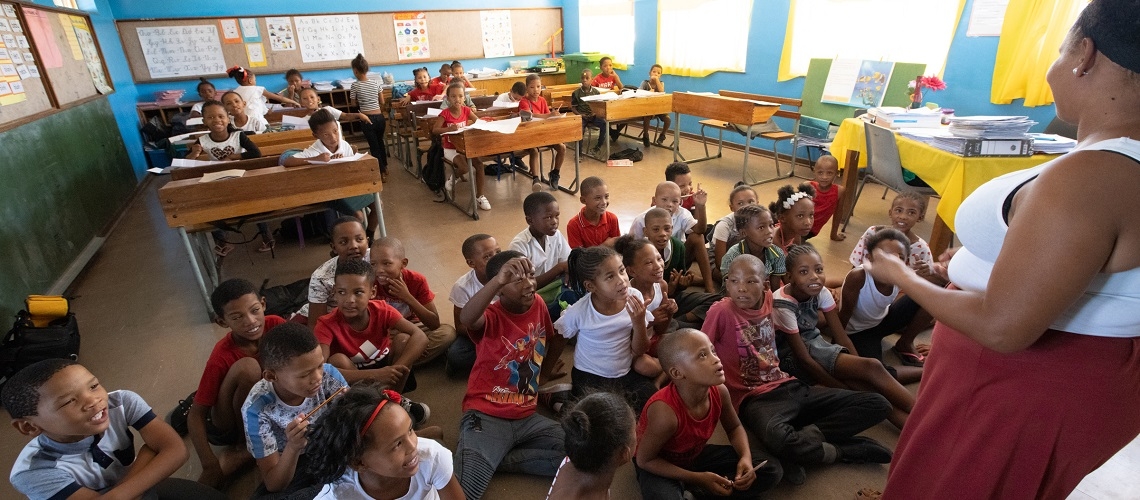
Nearly one in three women worldwide have experienced physical and/or sexual violence by an intimate partner in their lifetime. Alarmingly, the scourge of gender-based violence worsened since the COVID-19 pandemic started, as stay-at-home orders and government lockdowns forced women to stay home with their aggressors. Even after quarantine measures were loosened, heightened emotional and mental stress alongside financial insecurity and unemployment were identified as potential drivers of increased abuse. In the Caribbean region, advocates in Sint Maarten are working to support survivors and mitigate this violence within the country.

Continue reading

Commodity Markets Outlook: Ukraine war sparks food and energy shocks 

Shift to more costly trade patterns has begun; transition to cleaner energy could be delayeddownload

WASHINGTON, April 26, 2022—The war in Ukraine has dealt a major shock to commodity markets, altering global patterns of trade, production, and consumption in ways that will keep prices at historically high levels through the end of 2024, according to the World Bank’s latest Commodity Markets Outlook report.

Continue reading

Recap Spring Meeting Events

REPLAYS

In his speech at the Warsaw School of Economics ahead of the 2022 Spring Meetings, titled “Addressing Challenges to Growth, Security, and Stability,” World Bank Group President David Malpass discussed the millions who are suffering amid massive reversals in development and outlined actions the global community can take to help address this situation. Read the full speech here, which was broadcast live from Poland, a country that has taken in over 2.3 million Ukrainian refugees fleeing war.

April 19 | 11:30 AM EDT 

The Way Forward: 

Responding to Global Shocks and Managing Uncertainty

Responding to Global Shocks and Managing Uncertainty
IMF Managing Director Kristalina Georgieva and World Bank Group President David Malpass kicked off the 2022 Spring Meetings, emphasizing the need for increased debt transparency when debt levels are already high, and urged advanced economies to adjust their policies and improve access to markets, especially during the current food crisis. They also highlighted the immediate response both institutions are providing Ukraine and also discussed how to support the rebuilding of the country. #ResilientFuture
 
World Bank Group President David Malpass addressed the press during the International Monetary Fund and World Bank Group 2022 Spring Meetings. He provided updates on the Bank Group’s efforts to respond to myriad crises around the world, as well as to help developing countries manage uncertainty and deliver green, resilient and inclusive development. #ResilientFuture
As developing countries struggle to recover from the COVID-19 pandemic, digital solutions are enabling economic transformation and putting them on a path toward green, resilient, and inclusive growth. Private and public investment in digital solutions is bringing critical services to the poorest, creating jobs, strengthening small and medium businesses, enabling trade and services, and building resilience to shocks. Catch our replay and learn more. #PowerofDigital
 

April 21 | 11:00 AM EDT 

Financing Climate Action
 
Financing Climate Action lays out the complexities of tackling climate and development objectives together amid a geopolitical landscape characterized by conflict, rising prices, and intensifying climate impacts. Several pressing issues are addressed in a series of conversations, from the cost of phasing out coal and the scale of the climate risk we face, to the need to de-risk investments in low-carbon and energy efficiency projects in developing countries, and the expectations for COP27 in Egypt.  #Finance4Climate
 

Ukraine’s President Volodymyr Zelensky joined this roundtable discussion with the World Bank Group via video link from Ukraine. He spoke about the enormous humanitarian and economic costs of the Russian invasion on Ukraine – including the widespread destruction of schools, nurseries and universities. The World Bank Group estimates the Russian invasion has caused almost $60 billion in physical damage to buildings and infrastructure. The event was hosted by the World Bank Group and the Government of Ukraine.


April 22 | 12:00 PM EDT

On the Frontlines of Rising Fragility

By 2030, up to two-thirds of the world’s extreme poor could live in fragility, conflict, and violence (FCV) settings, so without addressing the challenges in these economies, we will not succeed in our mission to eradicate extreme poverty and boost shared prosperity. During this event, we heard from David Malpass, President of the World Bank Group, as well as partners and country representatives on how to stay engaged during times of crisis and meet the challenges in new and innovative ways. #RisingFragility


April 22 | 2:30 PM EDT

Preserving Open Trade

At a time when the global economy is coping with multiple shocks, including the pandemic, the Russian invasion of Ukraine and supply chain disruptions to food and other goods, governments are increasingly turning to subsidies for relief. But the costs can be very high, in terms of public spending and distorted incentives for investment and consumption. In this event, the heads of the four key global economic policy institutions—the World Bank Group, the IMF, the OECD and the WTO—discussed the importance of trade and global cooperation for overcoming current challenges and implications of subsidies for markets and poor countries.  #UnleashTrade


April 23 | 11:00 AM EDT

Invest in People

Now–more than at any other time in living memory–human capital is being dealt devastating blows by conflict, climate change, and the COVID-19 pandemic. The losses to learning, health outcomes, livelihoods, and gender equality have immediate and long-term impacts on people’s well-being and can undermine economic recovery and prosperity for years. Listen to leaders, innovators and change makers who are taking action to put people at the heart of recovery. #InvestInPeople


Helping Countries Cope with Multiple Crises

This year’s Spring Meetings of the World Bank Group and International Monetary Fund tookwrapupstory place at a time of overlapping global crises.  The war in Ukraine has compounded concerns about inflation, COVID-19, climate change, and debt, with many other countries also facing fragility and conflict.

The chair’s statement issued on Friday by the Development Committee, a ministerial-level forum that represents 189 member countries of the two organizations, noted that the impacts will be felt most in low- and middle-income countries, especially by their most vulnerable people, including women and children.  The statement added that economic recovery is at risk amid geopolitical tensions, with investment, trade, and growth affected, even as countries face further risks from the pandemic and uneven deployment of vaccines.

Continue reading

The 2022 World Bank Group Spring Meetings: Strengthening the case for globalism

In October, 2021, leaders from governments met at the IMF/World Bank Annual meetings to discuss the uneven recovery the global economy was experiencing, develop solutions to ramping up the global response to the COVID-19 pandemic, and explore ways to ensure that all countries can participate in a green, resilient, and inclusive return to stability and growth.

Continue reading

2022 World Bank Group Spring Meetings Events

UPCOMING EVENTS

April 19 | 11:30 AM EDT

The Way Forward:

Responding to Global Shocks and Managing Uncertainty

Responding to Global Shocks and Managing Uncertainty
The 2022 Spring Meetings are taking place in the shadow of war in Ukraine and rising global challenges due to conflict, COVID-19, and climate change. Join this conversation between IMF Managing Director Kristalina Georgieva and World Bank Group President David Malpass as they provide insights and highlight potential solutions to tackle challenges during this complex time. #ResilientFuture

Joint Statement: The Heads of the World Bank Group, IMF, WFP, and WTO Call for Urgent Coordinated Action on Food Security

  • Proposed actions to help vulnerable countries include providing emergency food supplies and deploying financial support to households and countries; facilitating unhindered trade; investing in sustainable food production and nutrition security.
  • Leaders call on the international community to support vulnerable countries through grants to cover urgent financing needs.

WASHINGTON, 13 April 2022— The Heads of the World Bank Group (WBG), International Monetary Fund (IMF), United Nations World Food Program (WFP), and World Trade Organization (WTO) today called for urgent action on food security. World Bank Group President David Malpass, IMF Managing Director Kristalina Georgieva, WFP Executive Director David Beasley and WTO Director General Ngozi Okonjo-Iweala issued the following joint statement ahead of the Spring Meetings of the IMF and World Bank Group next week:

Continue reading

Getting it right on development: We do not have to choose between people and climate

There is no doubt that climate change is profoundly unjust.  The world’s poorest countries did cif_south_africa_50268208563_6a25241b63_o_1the least to contribute to global emissions historically and poorer people within countries emit less than their rich neighbors. Nonetheless, poorer countries and poorer people are more vulnerable to climate impacts. They tend to be more exposed to climate change impacts, for instance living in places exposed to floods, working in occupations like agriculture, or lacking access to improved water and sanitation. And they have fewer resources to adapt and invest in protecting themselves.  

Continue reading

Europe and Central Asia Economic Update

eca-update-apr-2022-engThe Russian Federation’s war with Ukraine has triggered a catastrophic humanitarian crisis and threatened the stability of geopolitical relations. Economic output in the Europe and Central Asia region is forecast to contract by more than 4.1% in 2022—the second major shock and regional recession in two years. Moreover, the war has added to mounting concerns of a sharp global growth slowdown. The economic impact of the conflict has reverberated through multiple global channels, including commodity and financial markets, trade and migration links, and confidence. Neighboring countries in the Europe and Central Asia region are likely to suffer considerable economic damage because of their strong trade, financial, and migration links with Ukraine and Russia. Pandemic disruptions amid rising COVID-19 cases in some major economies have contributed to financial and commodity market volatility, and could ultimately weigh on global growth prospects. The war has also raised the likelihood of a destabilizing wave of refugees, widespread financial stresses among some emerging and developing economies, a de-anchoring of inflation expectations, and food insecurity. A protracted conflict is likely to heighten policy uncertainty and fragment global trade and investment networks. Policy makers need to ensure that they are better prepared to handle future crises as part of a commitment to a comprehensive approach to bolster resilient, inclusive, and green development. They should fortify their macroeconomic policy buffers and institutions to strengthen stability; promote an inclusive and more equal recovery by strengthening their social protection systems to protect the most vulnerable, including the refugees; and keep their focus on improving energy efficiency and green transition to secure a sustainable future.

REPORT      DOWNLOAD