The World Bank’s Bold New Vision

“To create a world free of poverty – on a livable planet.”

This vision and mission will test the sincerity of our ambition – it sets us on a journey that will require reimagined partnerships, a new way of working and thinking, an innovative plan to scale and replicate, additional resources, and optimism for what could be possible.

In all corners of the globe, people are eager to go to work, and to create with their own hands. They want a better life for their children and grandchildren.

We must be the hand on the back – moving people forward. We must be an institution that exports optimism and impact.
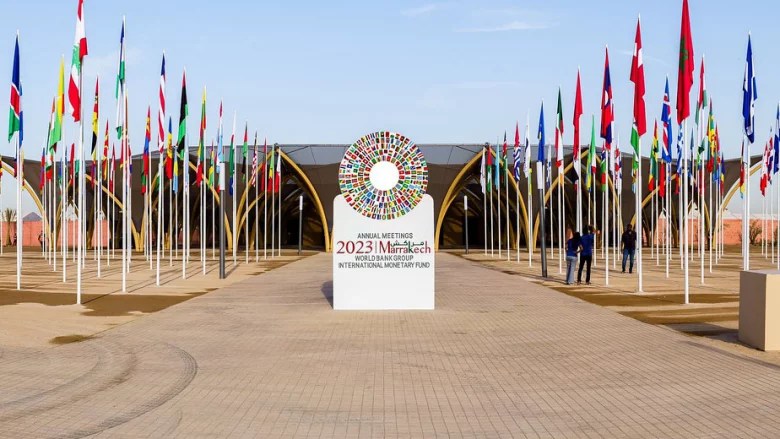
2023 Annual Meetings: A New Vision for Challenging Times

ANNUAL MEETINGS HIGHLIGHTS 2023meetings-signage

  • Expanded financial capacity. Stronger partnerships. Deeper engagement with the private sector. More efficient processes.
  • The Bank has adopted new tools that could provide $157 billion in additional lending capacity over a decade.
  • The Bank is exploring loan maturities of 35 to 40 years to help countries better navigate long-term social and human capital investments.

Continue reading

The World Bank’s Bold New Vision

“To create a world free of poverty – on a livable planet.”

This vision and mission will test the sincerity of our ambition – it sets us on a journey that will require reimagined partnerships, a new way of working and thinking, an innovative plan to scale and replicate, additional resources, and optimism for what could be possible.

In all corners of the globe, people are eager to go to work, and to create with their own hands. They want a better life for their children and grandchildren.

We must be the hand on the back – moving people forward. We must be an institution that exports optimism and impact.

Pandemic Threatens to Push 72 Million More Children into Learning Poverty—World Bank outlines a New Vision to ensure that every child learns, everywhere

WASHINGTON, December 2, 2020 – COVID-related school closures risk pushing an TCard COVID statadditional 72 million primary school aged children into learning poverty—meaning that they are unable to read and understand a simple text by age 10—according to two new World Bank reports released today. The reports outline a new vision for learning and the investments and policies, including on education technology, that countries can implement today to realize this vision.

Continue reading