
COP26 helped focus global attention on the challenge of transitioning out of coal. In recent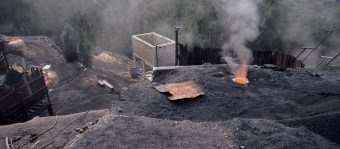 months, however, the war in Ukraine has led to a rise in coal use, as a short-term replacement of Russian oil and gas. But in the medium term, both advanced and developing economies will need to accelerate the coal transition to meet Paris Agreement targets. Decisive actions and financial resources are essential, but success will ultimately depend on effective policies to deal with the resulting disruption to jobs, reflected in the call for a “just transition.”
Tag Archives: Fossil Fuels
Air pollution kills – Evidence from a global analysis of exposure and poverty
Globally, poor air quality is estimated to cause some 7 million deaths each year, as it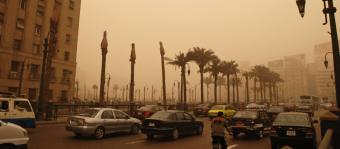 increases the risk of a wide range of cardiovascular and respiratory diseases. Yet the exposure to and impact of air pollution are not equally distributed. Air pollution is particularly prevalent in industrializing developing economies. Less stringent air quality regulations, the prevalence of older polluting machinery and vehicles, subsidized fossil fuels, congested urban transport systems, rapidly developing industrial sectors, and cut-and-burn practices in agriculture are all contributing to heightened pollution levels. The lack of affordable quality healthcare services further increases air pollution related mortality.
Diversification and cooperation in a de-carbonizing world: Climate strategies for fossil-fuel dependent countries
Countries’ attempts to tackle climate change will depend on their circumstances and  capabilities. Among the most challenging, will be how fossil fuel–dependent countries (FFDCs) do so, given their economies are the most dependent on fossil-fuel income and carbon-intensive industries. These countries represent almost one-third of the world’s population. They are themselves responsible for roughly 20 percent of global greenhouse gas (GHG) emissions but are home to over 80 percent of emissions embodied in known fossil fuel reserves. Many also have foundational systems built on the back of (expected) fossil fuels and related value chains and are, therefore, at risk as the global low-carbon transition gets fully underway.
Tackling climate change in the poorest countries
How can we help the poorest countries deal with climate change? The challenge is huge. Globally, the last three years were the hottest on record. Emissions of carbon dioxide from fossil fuels and industry started rising again in 2017 after briefly leveling off. Many regions are experiencing more severe and frequent storms, floods, and drought. According to the latest Intergovernmental Panel on Climate Change report, the climate consequences of a 2°C warmer world are far greater than for a rise of 1.5°C, and we are not on track for either.
Recognizing the urgent need for more action, the World Bank Group announced new and ambitious targets for our climate work with developing countries at COP24, this month’s global climate change conference in Katowice, Poland.
 Netherlands for the World Bank
You must be logged in to post a comment.