COVID-19 Drives Global Surge in use of Digital Payments

Three quarters of adults now have a bank or mobile money account; gender gap in accountAgricultura digital ownership narrows
WASHINGTON, June 29, 2022— The COVID-19 pandemic has spurred financial inclusion – driving a large increase in digital payments amid the global expansion of formal financial services. This expansion created new economic opportunities, narrowing the gender gap in account ownership, and building resilience at the household level to better manage financial shocks, according to the Global Findex 2021 database

Continue reading

When the debt crises hit, don’t simply blame the pandemic

Every debt crisis begins with unheeded warnings and ends with severe limits on investmentshutterstock_2051836073_blog_june_28heroimage1 in education, health, and infrastructure among other things. These crises often spark civil unrest and government collapse, delivering a lasting setback to the growth prospects of the affected country. 

Raising the bar on debt data transparency

Total public debt stands at an alarming 50-year high in low- and middle-income economies,jun2022_debttransparency_datablog_mainimage the equivalent of more than 200 percent of government revenues. With the pandemic-induced economic slowdown, the impact of the war in Ukraine, and the rise of interest rates, many countries are facing severe challenges in servicing their debt. 

Continue reading

Why Is the World Facing a Food Crisis? | The Development Podcast

The world is facing rising food prices that are hitting poor and developing countries hardest. Even before COVID-19 reduced incomes and disrupted supply chains, chronic and acute hunger were on the rise due to factors, including conflict, socio-economic conditions, natural hazards, climate change and pests.

The disruption caused by the war in Ukraine has added to price pressures, with costs likely to remain high for the foreseeable future and expected to push millions of additional people into acute food insecurity.

In this episode of The Development Podcast, World Bank Food and Agriculture Global Practice Manager Julian Lampietti explains the challenges and discusses some of the solutions. And we hear from a pizza restaurant owner in Cairo who is struggling with the rising cost of bread.

THE DEVELOPMENT PODCAST

brought by the World Bank Group


.  


A Conversation with David Malpass and Samantha Power

June 21st, 11:30 AM EDT (local time) –> LINK

Join World Bank Group President David Malpass, and USAID Administrator Samantha Power at 11.30am, June 21st for a conversation about the impact of the current overlapping global crises on the poorest and most vulnerable.

How should the international community respond to challenges including the war in Ukraine, rising food insecurity and higher inflation? What can we learn from past crises and what innovative ideas could help us respond to the current global shocks? President Malpass and Administrator Power discuss the global response, the role of governments and multilateral institutions, and ideas for the way forward. 

The Way Forward is an occasional series of in-depth discussions on development challenges and innovative solutions, hosted by World Bank Group President, David Malpass.

Speakers


Building disaster resilience among the vulnerable

Natural disasters cause billions of dollars in losses each year, but the damage estimatesfiji_disaster_2_1000 don’t tell the full story of their impact. The gravity of any loss depends on whom it affects, and the poorest people typically bear a much larger brunt of a natural disaster’s consequences.  With climate change bringing more frequent and severe natural hazards, ensuring a resilient recovery for all requires a better understanding of the impacts that policies can have – and particularly on the most vulnerable people. Experience shows that a wide range of relatively low-cost and effective measures can save lives and protect hard-earned development gains in the wake of disasters. 
Continue reading

COVID vaccines: Why we must succeed in every country

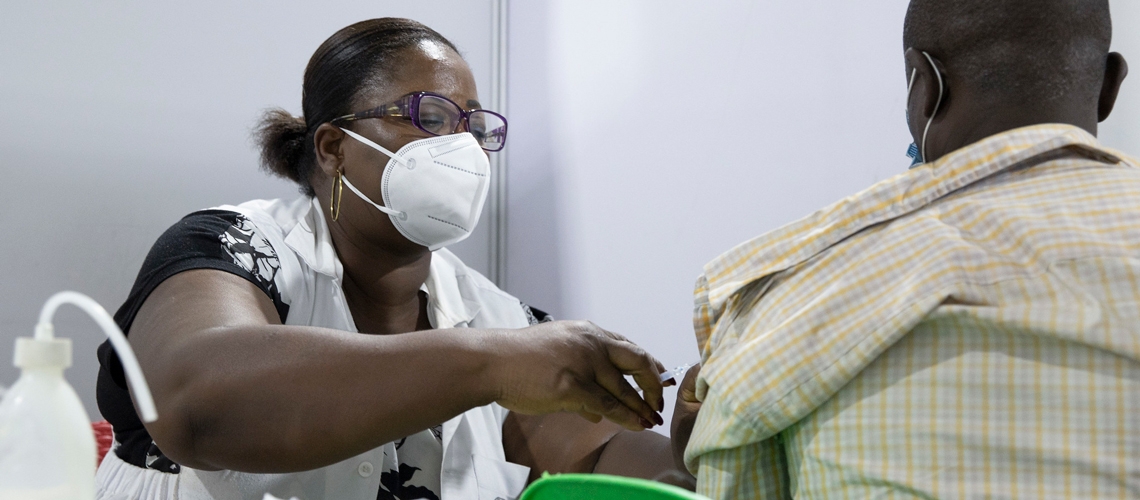
The COVID-19 pandemic is far from over, and vaccines remain our most important tool for vaccines_herohelping every country overcome it and get on the path to recovery. 

Since February, much of the world’s attention has shifted to Russia’s invasion of Ukraine and the risks it poses to global supplies of food and energy.  And the war is coming on top of many other crises – climate change, conflict in many other places, record numbers of refugees, and a rise in poverty for the first time in decades. But even among these daunting global challenges, COVID has particularly far-ranging health, social, and economic impacts, especially for the poorest countries and most vulnerable people.  

Continue reading

Commodity Markets: Evolution, Challenges, and Policies

The past two years of the global pandemic profoundly impacted our societies and economies. crane-light-heroThe COVID crisis heightened the need for multilateralism to tackle global challenges.  

Even as the worst of the pandemic starts to recede, the war in Ukraine threatens to impact global development outcomes. At the same time, climate impacts continue to mount. The findings of the latest IPCC reports provide a stark warning. We must decarbonize our economies at an accelerated pace and scale and reach net zero emissions by 2050  to avoid fundamentally altering our planet’s climate and its irreversible impacts on development. We must take bold and swift action and we must do so now to ensure that we can realize green, resilient and inclusive development.

Continue reading

World Bank Live

World Bank Live is the World Bank’s digital platform for live-streaming and engaging with globalsitename_en audiences in open and two-way conversations about international development.

Since 2013, World Bank Live has hosted over 700 public events in four languages: English, Spanish, French, and Arabic.

Panel discussions and high-level events are live-streamed during the Spring and Annual Meetings and throughout the year. International audiences can attend report launches, roundtables, speeches from senior management and global leaders, and join global conversations on key development topics such as climate change, economic recovery, debt management, digital transformation, sustainable development, and much more.

Each event is covered live by international development experts from the World Bank and partner organizations, taking questions from the audience in real-time and sharing research findings and learning resources.

Continue reading

Digital improvements can make or break ports

If you have made any major purchases in the last two years, it’s likely that you have personally hero_low_resolution_container_portfelt the impact of the global supply chain crisis. Pandemic-induced spikes in consumer sales and labor shortages triggered artery-clogging nightmares for some of the world’s busiest ports. At the most serious end of the spectrum, this has contributed to food shortages. But maritime backlogs can delay the delivery of everything ranging from clothes to couches to cars.

Continue reading