Wrap-up. Sustainable Development Goals (SDGs) and Partnerships
We wrap up all the developments from the Meetings with Devex’s Raj Kumar. UN Deputy Secretary General Amina Mohammed joins The Zone to talk about how to get the SDGs back on track and the partnerships needed to tackle poverty. Amit Bouri outlines how private investment can increase development impact, and Dr. Ahmed Ogwell Ouma of the Africa CDC gives insight on preparing for the next pandemic.
At this year’s World Bank Group-IMF Spring Meetings, management and shareholders recommitted to the institution’s vision of a poverty-free world and pledged to explore new solutions to tackle an ever-present set of threats to development and the lives of the poor—from stress in the banking sector and persistent inflation to rising debt, Russia’s invasion of Ukraine, and the mounting dangers of climate change.
Wednesday May 10 at 15:30-17:00 CET, World Hydrogen Summit Rotterdam
Join us at the World Hydrogen Summit for a seminar on Financing Green Hydrogen Projects in Developing Countries with the IFIs and Invest International.
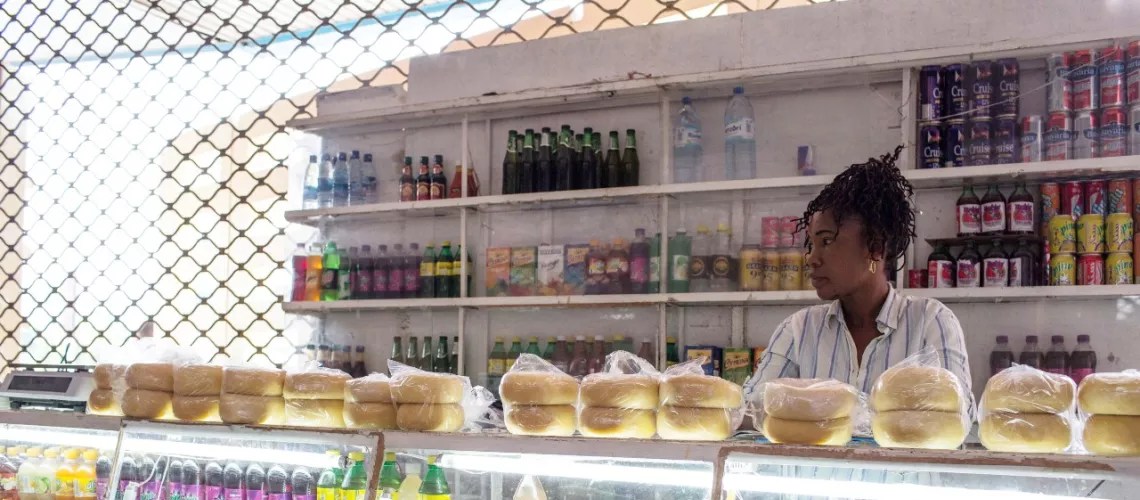
Small businesses can play an impactful role in fragile and conflict affected situations (FCS). They can create jobs and directly provide necessity goods and services such as food, water, health, education, and transportation. They can also contribute to the resilience of local populations during periods of conflict.
However, small businesses operating in FCS countries endure numerous setbacks to their activity, from frequent electricity cuts to bribery to armed attacks. Surviving and growing in these situations is difficult. Navigating daily challenges without access to affordable credit is almost impossible.
Figure 1. Access and use of financial services by SMEs
Image
Source: Author’s elaboration on WBES data
What drives SME financial exclusion in FCS countries vis-à-vis non-FCS countries? In a recent paper we examine this question, focusing in particular on the role of economic fundamentals and institutional factors. Economic fundamentals matter for SME financial inclusion. Higher incomes and better physical infrastructure increase savings and the pool of funds in the economy and improve access to finance while macroeconomic and financial stability can positively affect credit and other financial services to SMEs.
Institutions—the rules of the game in a society—matter too. Institutions influence the development of entrepreneurship and can support SME financial inclusion by improving the information environment and strengthening contract enforcement, as well as supporting equal treatment of firms in access to financial services.
On both counts, FCS countries generally lag behind non-FCS countries, especially, as would be expected, in terms of institutional development (figure 2). But what do we find in the data?
Figure 4. Macroeconomic, financial sector, institutional and business environment features
Image
Source: Author’s elaboration on WDI, GFD, WGI, WDI, Heritage Foundation
The results of our analysis show that output growth has a negative impact on SME financial inclusion in FCS countries, probably reflecting demand for countercyclical finance — typically backed by the government — by financially constrained SMEs that otherwise tend to resort to internal funds to finance their operations and investment.
On the other hand, price stability, a key sign of macroeconomic stability, is associated with higher SME financial inclusion in FCS countries. Moreover, access and usage of financial services by SMEs in FCS countries tends to increase with economic development, for example, income levels.
Other economic fundamentals also play a role in SME financial inclusion in FCS countries. Economies with large informal sectors tend to face tighter constraints on SME financial inclusion. Similarly, the lack of economic diversification also has a significant impact. Financial sector characteristics also affect SME access and usage of finance. The quantity of financial intermediation, such as deeper credit markets, helps enhance SME financial inclusion, and this is particularly important in FCS contexts.
The quality of financial intermediation is equally important because government and state-owned enterprise financing can crowd out credit to the private sector, including SMEs. In our sample of FCS countries, available credit tends to go proportionally more to the public sector than the private sector compared to non-FCS countries. Our analysis suggests that a significant role is played by crowding out effects in FCS countries. A lack of competition among banks reduces SME financial inclusion in FCS countries. Reducing banking market concentration is found to have a positive impact on SME access and usage of formal financial services in FCS countries. Finally, banking sector soundness, as measured by the quality of lending (NPL ratio), significantly and strongly supports SME financial inclusion.
Turning to institutional factors, strong governance and stable institutions exert a significant influence on SME access and usage of formal financial services in FCS countries. Voice and accountability, political stability, government effectiveness, and control of corruption are all positively correlated with SME financial inclusion. The importance of government effectiveness and control of corruption is particularly strong for FCS countries.
Credit information is also a key factor for SME financial inclusion. Rules affecting the scope, accessibility, and quality of credit information available through public or private credit registries can greatly facilitate banking relationships, and they are especially important for FCS countries.
Constraints to the quality of contract enforcement, property rights, and the effectiveness of courts, as well as to the ability of the authorities to formulate and implement policies and regulations that permit and promote private sector development, are negatively correlated with SME access and usage of formal financial services. Their impact is significantly stronger for FCS countries, suggesting that improvements in the overall business environment can have relatively sizable effects on SME financial inclusion in those countries.
Wednesday May 10 at 15:30-17:00 CET, World Hydrogen Summit Rotterdam
Join us at the World Hydrogen Summit for a seminar on Financing Green Hydrogen Projects in Developing Countries with the IFIs and Invest International.
In this month’s edition of IFC Insights, we focus on the power of connections. While the proliferation of new technologies has increased the ease and possibilities of connectivity across the globe, the access to and uptake of these tools has not always been evenly spread.
Amid multiple crises and one of the sharpest global economic downturns in nearly three decades, policymakers are looking for new tools to improve productivity and raise revenue. Sugar-sweetened beverage (SSB) taxes are of increasing interest for their potential to both improve population health and bring in new revenue. These taxes increase the price of sugary drinks such as sodas and energy drinks, relative to healthier alternatives such as unsweetened water.
· World Bank Procurement in Investment Project Financing helps borrowers achieve sustainable development objectives through value-based, principled, and transparent procurement guidance and support.
· The World Bank Procurement Framework launched in 2016 promotes a strategic, fit-for-purpose approach to procurement that focuses on impact and overall value-for-money.
· In keeping with the value-focused approach, most World Bank-financed Procurement will require the use of Rated Criteria which will promote the inclusion of key quality and sustainability criteria rather than using just the lowest evaluated price for award decisions.

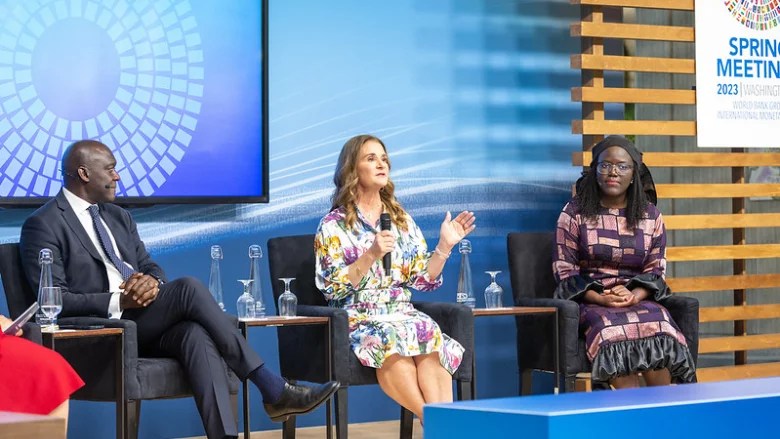 recommitted to the institution’s vision of a poverty-free world and pledged to explore new solutions to tackle an ever-present set of threats to development and the lives of the poor—from stress in the banking sector and persistent inflation to rising debt, Russia’s invasion of Ukraine, and the mounting dangers of climate change.



 proliferation of new technologies has increased the ease and possibilities of connectivity across the globe, the access to and uptake of these tools has not always been evenly spread.
  management practices in banking. Understanding potential balance-sheet risks arising from holding specific assets is paramount. That’s why,
  decades
 sustainable development objectives through value-based, principled, and transparent procurement guidance and support.
 Netherlands for the World Bank
You must be logged in to post a comment.