
WASHINGTON, Dec. 18, 2023 — Remittances to low- and middle-income countries (LMICs) grew an estimated 3.8% in 2023, a moderation from the high gains of the previous two years. Of concern is the risk of decline in real income for migrants in 2024 in the face of global inflation and low growth prospects, according to the World Bank’s latest Migration and Development Brief released today.
Category Archives: WBG News & Reports
Toward a path to sustainable refugee return
In public debates, return is often regarded as the most natural solution for refugees: they are “out of place” and return seems the most sensible way to restore the natural order of things. But is it that simple?

We need to change the way we support refugees – now !
On a recent joint visit to Adré, a town in Eastern Chad at the border with Sudan—on an arid land where nothing seems to grow except tents set up by UNHCR—we witnessed tragedy and hope. Tragedy because of the horrific tales from recently arrived refugees who had to leave their lives behind due to the violence in Sudan—the killings, the rapes, the ransacks. Hope, because despite dire development challenges, Chad is offering protection and safety, at least until refugees can return safely to Sudan.
Refugee education: Financing what matters
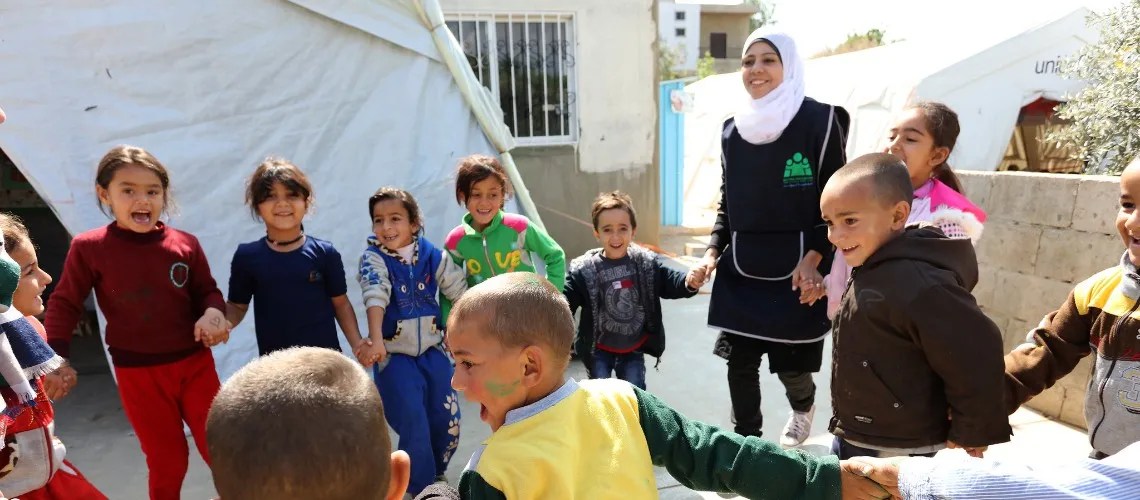
At the Global Refugee Forum this week, education stakeholders will pledge to include all refugee children in national education systems. Three major questions arise: what does inclusion mean, why does it matter and how do we get there?
Inclusion refers to refugee children attending schools that are part of the host country’s national public system, funded through government channels, and attended by both refugee and host community children together.
Continue readingPlanting Mangrove Forests Is Paying Off in Indonesia
Paying local residents to plant mangroves has raised incomes, increased fishery output, protected coastal areas, and contributed to efforts to mitigate climate change.
protected coastal areas, and contributed to efforts to mitigate climate change.Mangroves play a critical role in supporting coastal livelihoods, protecting coasts from disasters, and mitigating global climate change. They can contribute to ending poverty and creating a livable planet. They are particularly important in Indonesia, which has the world’s largest and most diverse mangrove forests.
Remarks by World Bank President Ajay Banga at Transforming Climate Finance Event, COP28
As Prepared for Delivery
We are here at a critical moment in the arc of humanity – and the planet.
But it is not a moment without hope.
The resources of wealthy nations can create opportunities, meanwhile the abundance of sun, wind, fertile soil, and young people enjoyed by emerging economies could drive our future.
World Bank Group Doubles Down on Financial Ambition to Drive Climate Action and Build Resilience
DUBAI, December 1, 2023 – With an ambitious financing package announced at COP28, the World Bank Group is helping people in developing countries better withstand the devastation of climate change and create a better world for their children and grandchildren.
The World Bank Group is pushing to do more to battle climate change and do it faster, devoting 45 percent of its annual financing to climate-related projects for the fiscal year that runs from July 1, 2024, to June 30, 2025.
This increased ambition is more than just a laudable percentage—it’s putting to work more than $40 billion—around $9 billion more than previously programmed. In 2021, the Bank announced a goal to reach an average of 35 percent by 2025 and is currently ahead of schedule, running at an average of 36.3 percent since July 2022.
In October, the World Bank secured an ambitious—and expanded—mandate to create a world free of poverty on a livable planet. The new climate pledge is a concrete example of the Bank delivering on that mandate.
In addition to boosting resilience and adaptation among those hardest hit by the effects of climate change, World Bank Group projects also will focus on safeguarding ecosystems and biodiversity to protect the health of people and planet.
Having pledged to squeeze more from its balance sheet to fund the fight against climate change, the Bank will continue to deliver on adaptation to help countries devastated by climate shocks and on mitigation to help reduce the greenhouse gases contributing to climate change.
Last Updated: Dec 01, 2023
New Program to Protect Millions from Rising Climate-Related Deaths and Illness
At least 21 million could die from five main health risks caused by a warmer planet
DUBAI/WASHINGTON, Dec. 3, 2023 — The World Bank announced today at COP28 a new Climate and Health Program to urgently respond to the rising negative health impacts of climate change in low- and middle-income countries.
Through this program, the World Bank will help countries to assess their climate and health vulnerabilities, increase investments in climate-resilient health systems, and work with partners to mobilize additional financing, evidence, and collective action to reduce the impacts of climate change on people’s health and livelihoods.
New World Bank data shows that a warmer climate could lead to at least 21 million additional deaths by 2050 from just five health risks: extreme heat, stunting, diarrhea, malaria, and dengue. Preventing these deaths requires immediate action to reinforce health systems, particularly in climate-vulnerable countries, predominantly in sub-Saharan Africa and South Asia. The World Bank also estimates that by 2030 the impacts of climate change on health will force 44 million more people into extreme poverty.
“Climate change amplifies health risks, creating a cycle of ill health and poverty with far-reaching consequences for human capital development,” said Mamta Murthi, Vice President for Human Development at the World Bank. “Through the Climate and Health Program, the World Bank will use its knowledge and financing to help countries address health risks stemming from climate change, work across related sectors, and bring together partners to maximize financing and harmonize investments and actions.”
The Climate and Health Program will include generating evidence on the most cost-effective interventions to tackle the climate and health crisis; increasing financing for solutions that can build sustainable and resilient health systems in client countries; and build strong partnerships to amplify impact. Specifically, the program will:
- Create evidence and knowledge to identify country needs and inform investments. This includes systematically assessing climate-related health vulnerabilities in developing countries, focusing on the impacts on lives, livelihoods, and economies and identifying country-specific ‘best buys’ for climate and health.
- Invest in solutions that are country-tailored and evidence-based and scale-up investments for low-carbon resilient health systems through the Bank’s $34 billion health portfolio which is already active in over 100 countries. Investments will focus on better surveillance and early warning systems, improving health service delivery in the face of climate-driven disease patterns, climate-proofing health facilities, and strengthening health worker capacity.
- Work in partnership with the World Health Organization, Gavi, The Global Fund, foundations, and others to maximize impact by supporting global, regional, and country efforts to scale up climate-health action.
As part of this program, the World Bank is co-convening a Development Bank Working Group for Climate-Health Finance with participation from multilateral and public development banks to align and maximize climate and health investments. The World Bank also works in partnership with the World Health Organization, Gavi and the Global Fund, foundations, and others to scale up climate and health action.
The impact of the climate crisis on the health of current and future generations depends on the decisions we make today. The World Bank is committed to supporting countries to address the greatest health challenge of our time.
For more information, please visit our health and climate change brief and follow @WBG_Health
PRESS RELEASE NO: 2024/034/HD
Contacts
Alexandra Humme
World Bank Group at COP28
Live From Dubai, United Arab Emirates
Join us for a series of events on climate change,
live from the 28th United Nations Climate Change Conference.
The World Bank Group is doubling down on its climate action, as part of its new vision to end poverty on a livable planet. Our live programming will focus on climate solutions, emissions reduction, energy transition, adaptation and climate finance; all while exploring the link between climate change and development.
Follow the conversation on social media #LivablePlanet.
GO TO: SCHEDULE OF LIVE EVENTS | FEATURED SPEAKERS
Scaling Global Clean Hydrogen Financing
 Netherlands for the World Bank
You must be logged in to post a comment.