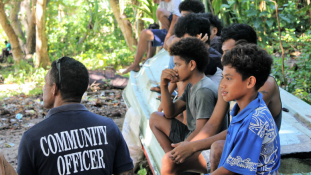
Isolation and Opportunity; Strengthening Justice in Remote Solomon Islands

STORY HIGHLIGHTS feature2-web

  • In remote areas of the Solomon Islands, police are often not present causing a challenge to maintain law and order.
  • Locally elected Community Officers are facilitating local justice and providing a vital link between the government and citizens in remote areas of the Solomon Islands.
  • Remote communities now know there is much needed help for conflict resolution, strengthening connections between communities and the state


Continue reading

Introducing the online guide to the World Development Indicators: A new way to discover data on development

The World Development Indicators (WDI) is the World Bank’s premier compilation of international statistics on global development. Drawing from officially recognized sources and including national, regional, and global estimates, the WDI provides access to almost 1,600 indicators for 217 economies, with some time series extending back more than 50 years. The database helps users—analysts, policymakers, academics, and all those curious about the state of the world—to find information related to all aspects of development, both current and historical.

Continue reading

The Safe Food Imperative: Accelerating Progress in Low- and Middle-Income Countries

STORY HIGHLIGHTSfood_key

  • Unsafe food costs low- and middle-income economies US$ 110 billion in lost productivity and medical expenses each year.
  • Preventative measures—including greater investment, better regulatory frameworks and measures that promote behavior change—can help countries avoid food safety problems
  • An inclusive approach to food safety management that makes food safety a shared responsibility among government, farmers, food businesses and consumers will be most effective

Continue reading

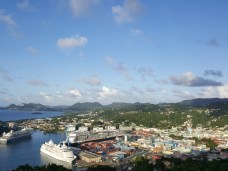
What does Urban Resilience mean in the Eastern Caribbean context?

When you think of a city, what comes to your mind? Skyscrapers? Subways? Crowds of castries_saintluica.jpgpeople jostling each other as they head to work? And what comes to mind when you think of an Eastern Caribbean island? Sun, sand, beaches paradise? Yet, Eastern Caribbean countries also have cities of thousands of people. In 2017, 35% of the Eastern Caribbean* population was urban: 221,000 out of 628,000 people lived in cities.
Continue reading

Ending hunger to end poverty, ending poverty to end hunger

Last week we had World Food Day on October 16 and World Poverty Day on October 17.capture1_39  The good news from World Poverty Day is that there is global progress on reducing extreme poverty.  Based on the latest available data, it is estimated that in 2015 there were 736 million people living on less than US$1.90/day, which compares very favorably to the 1,895 million people living in extreme poverty in 1990.  And while the world’s population grew from 5.3 billion in 1990 to 7.4 billion in 2015, the poverty rate fell from 36 percent to 10 percent or 1 percentage point per year on average over this period. 

At the same time, progress in reducing extreme poverty has been uneven. There have been sharp reductions in absolute numbers in East Asia and the Pacific and in South Asia, but the number of people living in extreme poverty in Sub-Saharan Africa has increased significantly.

Continue reading

Accelerating progress towards human capital and financial inclusion

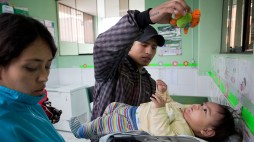
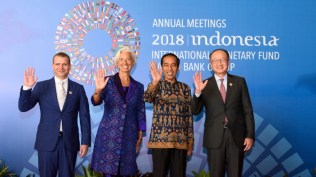
Last week, more than 11,000 delegates from the World Bank Group’s member countries baby3–public and private sector attendees–gathered at our Annual Meetings in Indonesia to discuss how we can accelerate progress toward our twin goals: to end extreme poverty by 2030 and boost shared prosperity among the poorest 40 percent around the world.

Disruptive technologies create opportunities for development but they also put those goals at risk. Our discussion this past week focused on the changing the nature of work – the topic of our World Development Report this year. While technology and automation are doing away with some jobs, innovation is also creating new occupations, and launching career fields that didn’t exist a few years ago. Those who are prepared for this future will have many opportunities to achieve their aspirations. Those who are not will be left behind.

Continue reading

Why the World Bank is adding new ways to measure poverty

The 2018 Poverty and Shared Prosperity Report shows how poverty is changing and World Bank buildingintroduces improved ways to monitor our progress toward ending it.

The landscape of extreme poverty is now split in two. While most of the world has seen extreme poverty fall to below 3 percent of the population, Sub-Saharan Africa is experiencing extreme poverty rates affecting more than 40 percent of people. The lamentable distinction of being home to the most people living in extreme poverty has shifted, or will soon shift, from India to Nigeria, symbolizing the increased concentration of poverty in Africa.

Continue reading

World Bank Announces $1bn Assistance for Indonesia Natural Disaster Recovery and Preparedness

NUSA DUA, Bali, Indonesia, October 14, 2018—The World Bank has announced imagesfunding of up to $1 billion for the Government of Indonesia to supplement relief and reconstruction efforts in the disaster-affected areas of Lombok and Sulawesi, and to bolster long-term resilience.

The funding will be available on request by the Government. It would be guided by a US$5 million grant for technical assistance for detailed planning to ensure reconstruction is resilient and community-led.

Continue reading

Investing in People: The Time is Now

Global economic growth is continuing, but with intensified risks that include policy investing-in-people-the-time.jpguncertainty, geopolitical developments, a gradual tightening of financing conditions, and a rise in debt levels and currency volatility. The World Bank Group is helping member countries address these challenges, through a combination of financial assistance and policy advice to promote robust and inclusive economic growth, reduce risks, and foster competitiveness, while strengthening fiscal sustainability and financial resilience.

Continue reading

Everything you need to know to follow the 2018 Annual Meetings

The IMF/World Bank Group Annual Meetings is an event you won’t want to miss. Join us042418-art_exhabition_preston-086_f for a week of seminars, regional briefings, press conferences, and many other events focused on the global economy, international development, and the world’s financial system. This year’s events will take place in Nusa Dua, Bali, Indonesia, October 8-14, 2018.

Find out why the World Bank, countries, and partners are coming together to try to close the massive human capital gap in the world today. Catch the launch of the new Human Capital Index on October 11, 2018, and spread the message that it’s critical to #InvestinPeople.

Continue reading