
The Transforming Transportation 2026 (TT26) conference, held in Washington, D.C., recently concluded with a powerful message: transport is no longer just about infrastructure—it is the engine for global economic security and job creation. Under the theme “Powering Jobs and Growth,” the 23rd edition of this flagship event, co-hosted by the World Bank and the WRI Ross Center for Sustainable Cities, gathered world leaders to address how smarter mobility can bridge the gap between poverty and opportunity.
This year’s forum emphasized that transport investments are pivotal in a landscape shaped by economic shifts and the rise of AI. Beyond moving people from point A to B, the discussions focused on how resilient corridors and digitalized transit systems can catalyze industrial growth and provide reliable connectivity to underserved regions. From high-level plenaries featuring World Bank Managing Director Paschal Donohoe to technical sessions on decarbonization, the event served as a laboratory for the next decade of global mobility.
The Netherlands: A Strategic Partner in Innovation
The Netherlands has long been a global frontrunner in sustainable transport, and its role at TT26 was no exception. As a top-tier partner to the World Bank Group, the Netherlands contributes not only capital notably through the Global Facility to Decarbonize Transport (GFDT) but also unparalleled technical expertise in “active mobility” and water-integrated infrastructure.
Dutch influence is visible in how the World Bank now approaches urban design, moving away from car-centric models toward the inclusive, cycling-friendly “Dutch model” that promotes public health and reduces emissions.
Spotlight on Procurement: Bridging the Public and Private Sectors
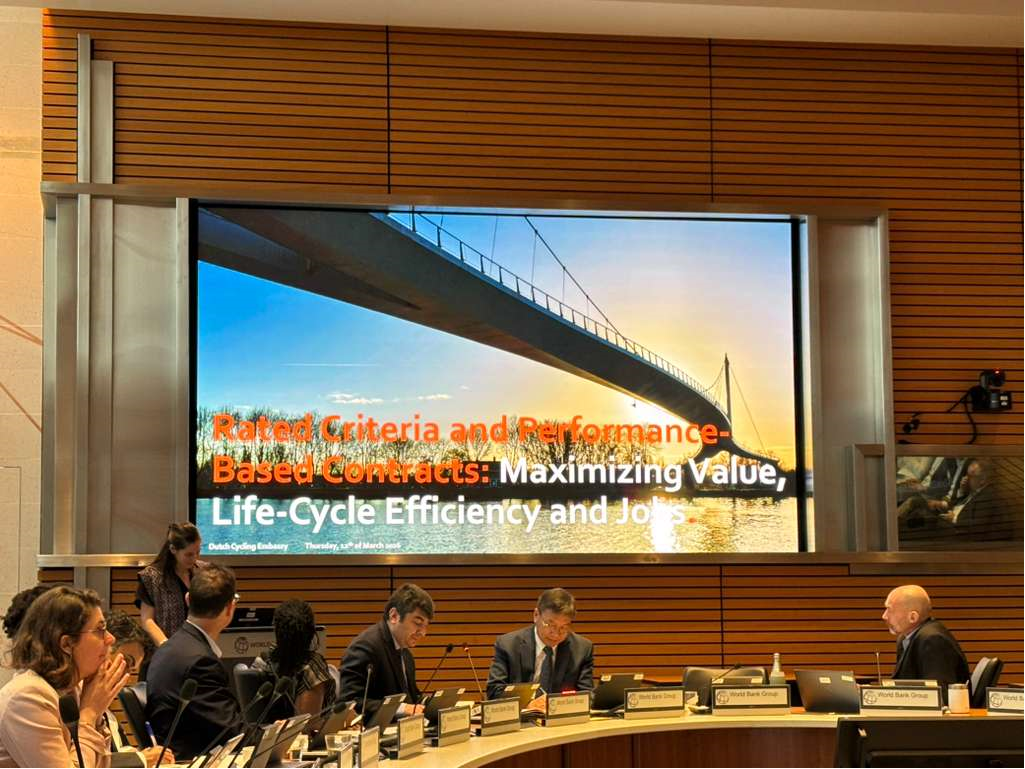
A standout feature of this year’s conference was the direct collaboration between the Netherlands Embassy in Washington, D.C. and the World Bank Group. Recognizing that the private sector is the primary driver of innovation and job creation, the Embassy co-organized a specialized technical session on procurement.
This session provided a vital platform for private sector stakeholders to engage directly with World Bank procurement specialists. By focusing on the “how” of project delivery, the session helped layout the complex bidding processes of Multilateral Development Banks (MDBs). This collaboration ensures that Dutch and international companies with high-tech, sustainable solutions can effectively navigate tenders, ensuring that World Bank-funded projects are built with the best available expertise.


You must be logged in to post a comment.