

For decades, policymakers assumed that prosperity is driven by building infrastructure, mobilizing labor, and creating financial systems to spur investment – while nature has been treated as abundant and free. Yet economic progress always relied on Earth’s natural assets: fertile soils that feed civilizations, clean water that sustains health and productivity, and forests that supply materials. But what happens when natural resources and the services they provide are no longer abundant?
A new World Bank report, Reboot Development: The Economics of a Livable Planet, shows that today the health of our land, air, and water shapes prosperity as much as roads, jobs, and finance. The report reveals that more than 90 percent of people on Earth live with degraded land, unsafe air, or stressed water, and roughly 40% of all employment is directly dependent on nature. Investing in nature is a chance to restore balance, generate jobs, and launch a new era of prosperity.
Here are five essential insights from Reboot Development that every policymaker, CEO, and development practitioner should know.
1. We are pushing nature beyond its limits
There is now ample evidence showing that human activity has profoundly altered the biosphere – the thin layer of the Earth’s surface that supports all life – reshaping and degrading natural ecosystems.
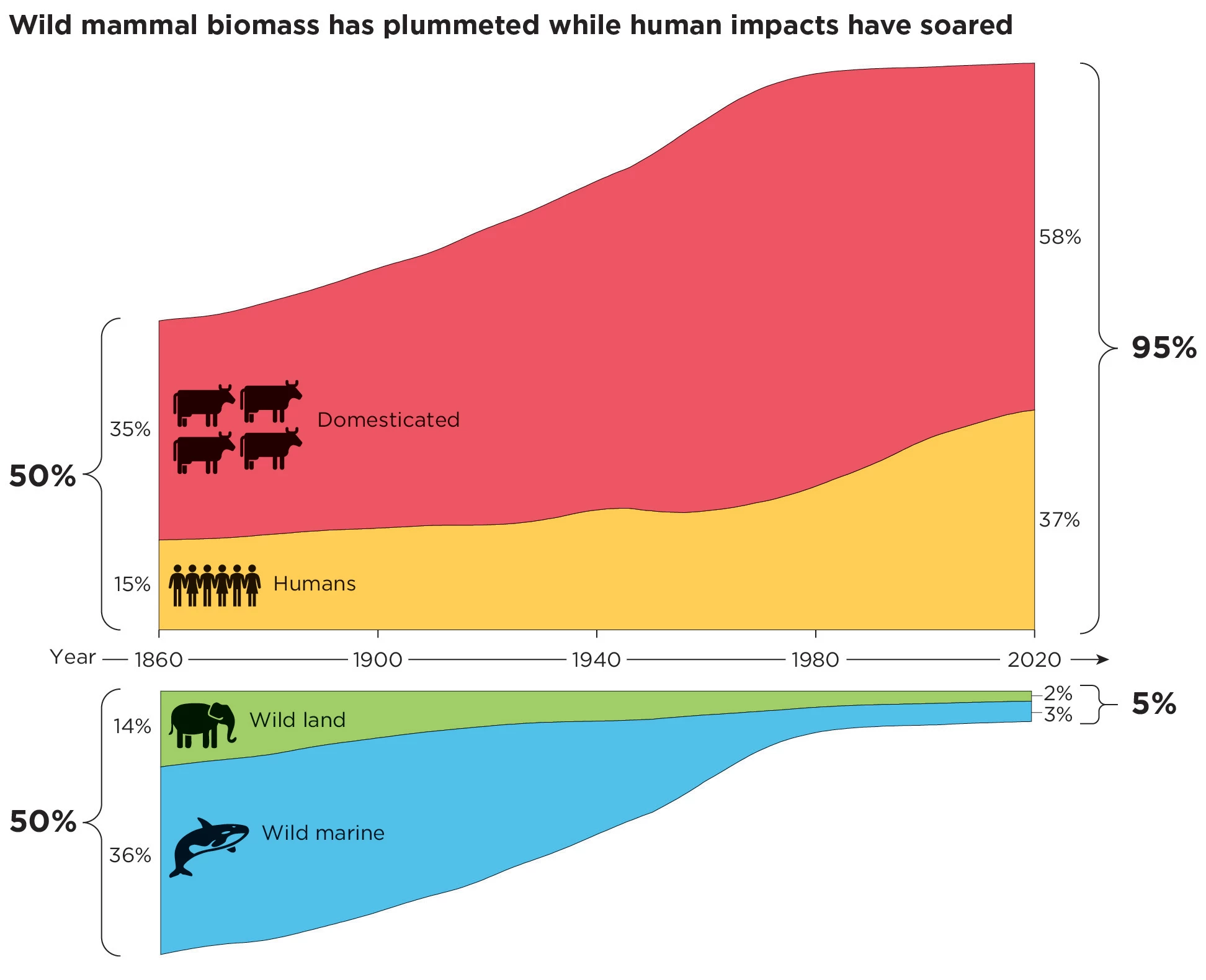
The world has also crossed 6 of the 9 “Planetary Boundaries”, namely the scientifically defined limits for Earth systems that keep the planet habitable. Just 150 years ago, wild mammals accounted for about half of all biomass. Today, they account for a vanishing 5 percent, while humans and their livestock account for an astonishing 95 percent of biomass.
2. Rebooting development needs more than dollars
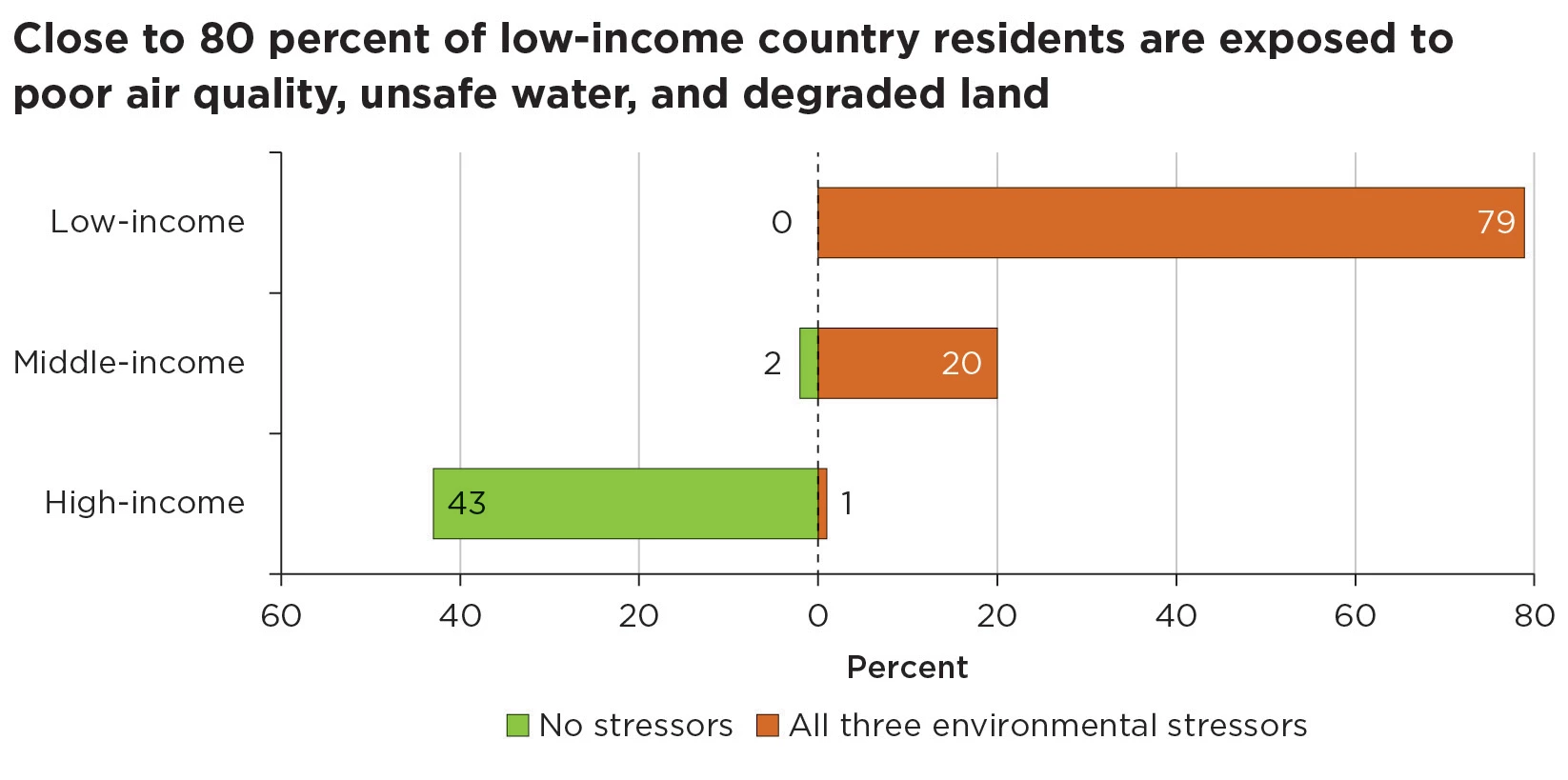
Many of the world’s poorest societies face severe environmental decline before they have raised living standards. The old paradigm—that pollution is a necessary evil of industrialization—is no longer valid. Many of the most affected countries have yet to industrialize. In low-income countries, 80 percent of people face three hazards at once: land degradation, unsafe air, and water stress. Land degradation erodes food security and livelihoods. Poor air quality reduces labor productivity and increases health costs. Water stress undermines health, agriculture, and energy generation. Closing the development gap requires more than dollars: it requires integrated solutions that address both poverty and environmental degradation together.
3. Forests are economic infrastructure
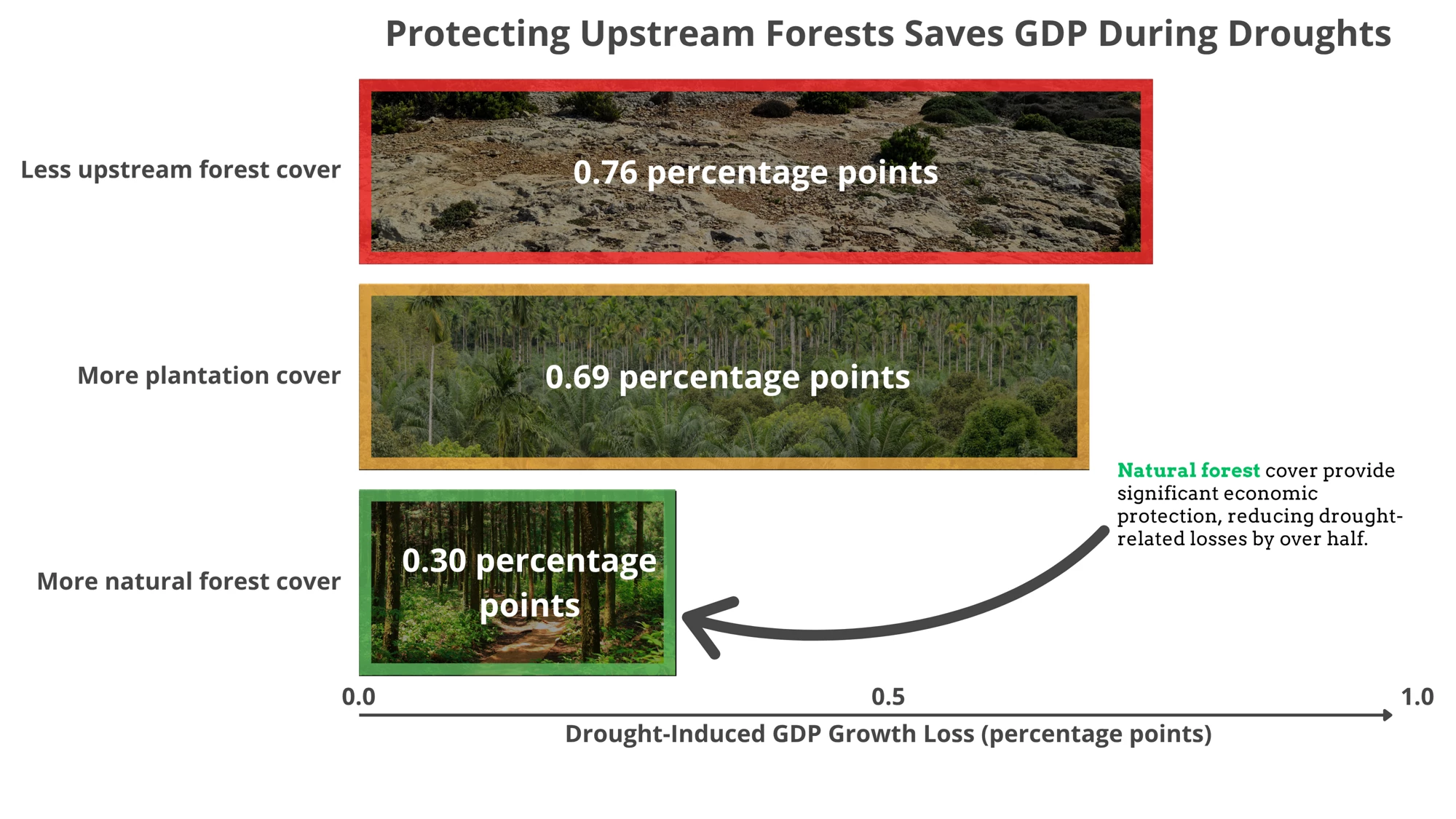
Forests are more than carbon sinks or biodiversity havens. They are engines of the water cycle. They pump moisture into the atmosphere, regulate rainfall, and store water in the soil. When forests fall, rainfall declines, droughts intensify, and economies suffer.
Reboot Development shows that deforestation-induced rainfall loss costs over $15 billion annually, while reduced soil moisture leads to $379 billion in agricultural losses, or about 8% of global agricultural GDP. Natural forests are more than twice as effective as plantations in buffering droughts. Their economic value is vastly underestimated.
Healthy landscapes also support vital ecosystem services—from pollination to pest control—that keep economies resilient. Investing in well-managed forests and biodiverse landscapes is a smart insurance policy for future prosperity.
4. Efficiency is a hidden engine of sustainability
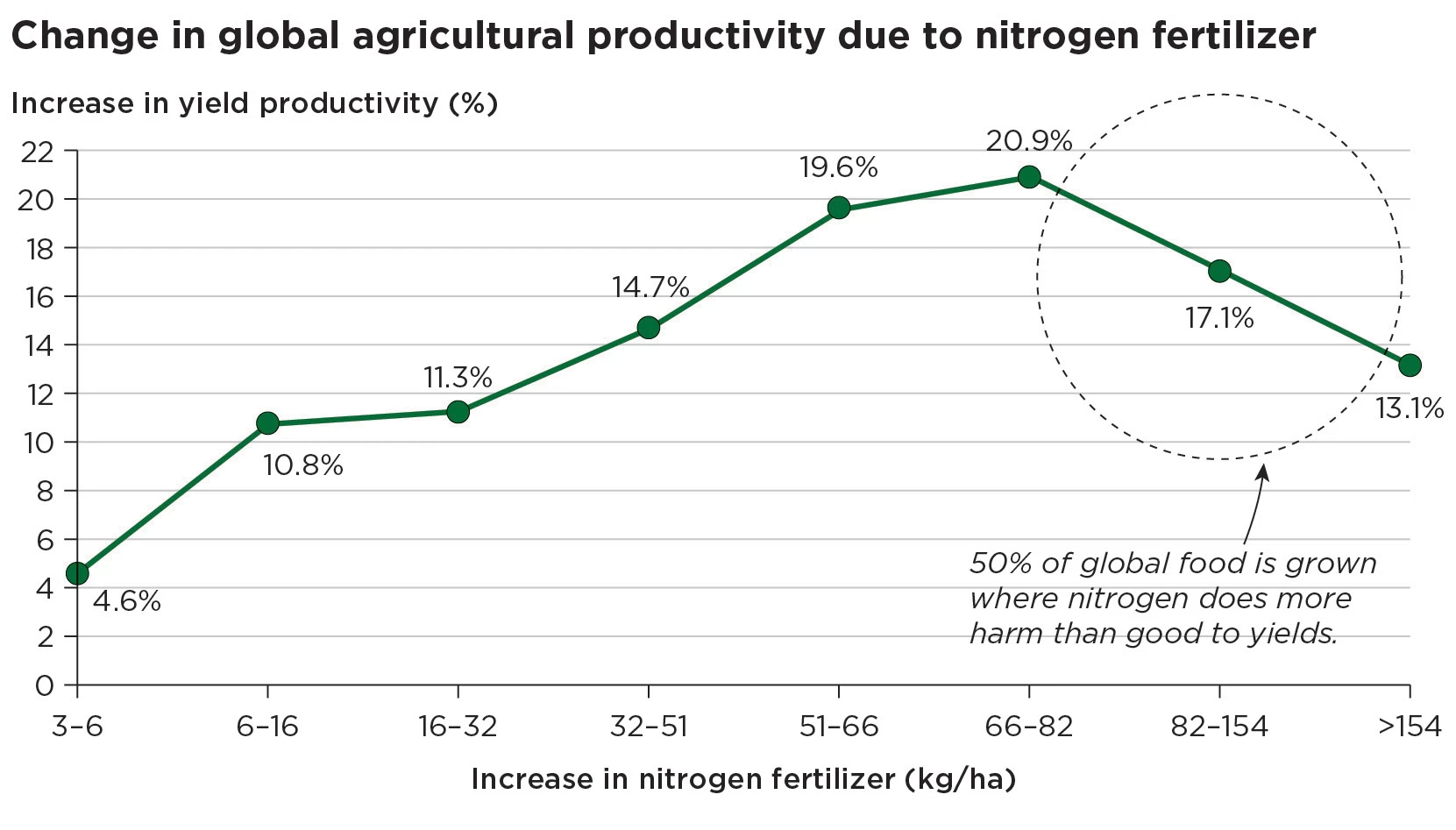
Inefficiency is the quiet headwind negatively impacting land, air, and water use. Globally, nearly a third of all food produced is lost or wasted each year. More than half of nitrogen fertilizer applied never nourishes crops but instead pollutes water and air. Water systems lose about 30 percent of their supply – the equivalent of half the Ganges River’s flow – through leaks, theft, or metering errors.
The gains from closing these gaps are enormous. Over the past decade, efficiency gains have offset nearly 50 percent of the increase in water use, 60 percent of the increase in air pollution and 70 percent of the increase in land use from economic growth.
But efficiency alone has its limits and moving toward more circular and regenerative models will be key to sustaining gains as economies grow.
5. A livable planet can safeguard livelihoods and generate jobs
Environmental conditions can shape both the quantity and quality of jobs worldwide. Natural resources—like fertile soils, healthy fisheries, and vibrant forests—underpin the livelihoods of hundreds of millions of people in agriculture, fisheries, and tourism. Air and water pollution reduce productivity and wages, drive skilled workers away, and weaken competitiveness. By some estimates air pollution reduces 1.2 billion workdays annually.
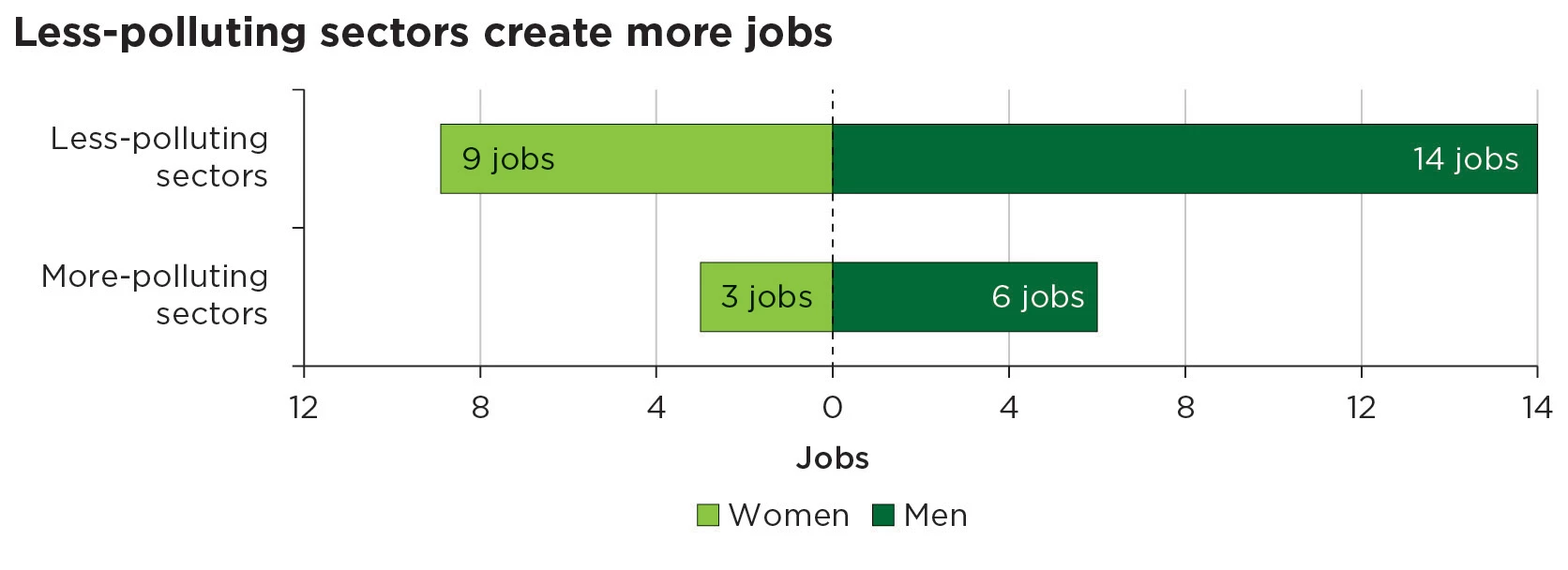
The good news is that rebooting development around a livable planet is not just possible, it is the smarter economic choice. A shift to a cleaner and restorative economy can bring more opportunities and generate significant returns. Investment in less-polluting sectors on average can create more jobs per $1 million invested compared to more-polluting ones.
Smarter fertilizer use can boost yields while simultaneously reducing pollution, delivering benefits 25 times greater than costs. Market-based air pollution controls can deliver exceptional value: in some settings each $1 invested could return as much as $215 in benefits. And cheap solutions like chlorine tablets to purify water can save one in four children lost to waterborne disease.
To unlock these jobs and economic opportunities, 3 broad principles are key:
- First, investing in better information to empower citizens and improve how we monitor and manage problems.
- Second, strengthening coordination so policies across sectors work together, not at cross-purposes.
- Third, building a culture of evaluation—testing, learning, and adapting as we go because learning beats guessing.
By putting these principles into practice, countries can avoid the pitfalls of reforms that ignore the links between land, water, air, and people, and instead chart a path to a livable future.
“Credit: World Bank Group. All rights reserved”
 Netherlands for the World Bank
You must be logged in to post a comment.