
Energy efficiency is a transformative, low-cost solution that can fast-track access to affordable and secure energy and boost economic growth. Amid soaring power demand, driven in part by air conditioners, heavy industry, and, increasingly, data centers needed to power artificial intelligence, energy efficiency can help countries avoid overspending on new energy infrastructure, importing fuels, and taking on more debt for their energy sectors.
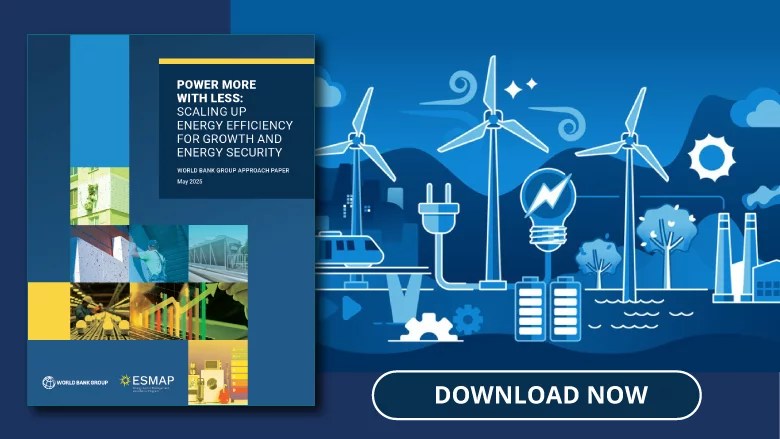
Power More with Less: Scaling up Energy Efficiency for Growth and Energy Security provides a roadmap to harness the vast, untapped potential of energy efficiency in developing countries. It showcases successful examples of low- and middle-income countries that have prioritized energy efficiency in their energy sector policies, targets, and programs. The report is intended for client countries, international financial institutions, broader donor community, and the private sector.
Energy efficiency is no longer optional—it is a necessity for countries seeking affordable and reliable energy for their people, while driving economic growth and creating jobs. Our new report showcases successful national approaches and offers a roadmap to help develop effective large-scale programs to unlock the vast potential of energy efficiency.

Guangzhe Chen
World Bank Vice President for Infrastructure
KEY MESSAGES
The energy efficiency challenge is global
- Two-thirds of energy worldwide is wasted, representing a loss of nearly 5% of global GDP.
- To meet growing energy demands while driving economic growth, around 40% of global energy spending by 2050 should come from energy efficiency.
- Investing in energy efficiency has never been more urgent, especially in developing countries where energy demand is set to rise by over 30% by 2050.
- However, energy efficiency is not a high priority for most governments, accounting for only a small fraction of energy investments in emerging economies. Political will and supportive policies are in short supply, and inadequate financing and unreliable information also hinder progress.
- Low-income and lower-middle-income countries face the most acute barriers due to high capital costs and access to financing, making it harder for them to invest in energy efficiency.
Investing in energy efficiency is a smart investment
- For every dollar invested, energy efficiency can yield $3 to $5 in returns and deliver many other socio-economic benefits, such as reduced energy poverty and government spending, enhanced resilience, and lower pollution, while significantly cutting future energy supply investments.
- For a typical middle-income country, energy efficiency investments can provide up to $11.6 billion in savings by 2050.
Energy efficiency can boost competitiveness and create jobs
- In 2022, energy efficiency was the biggest source of jobs across the energy sector, employing nearly 11 million people worldwide, ranging from manufacturing and construction to installation and support services.
- In Poland, the national Clean Air Priority Program is expected to generate over 100,000 jobs over 10 years, ranging from manufacturing and construction to installation and support services.
- IFC’s innovative EDGE, a green building certification program, has trained over 10,000 experts globally.
- In India, Energy Efficiency Services Ltd created almost 700 direct jobs and thousands of indirect jobs in efficient bulbs, electric vehicles, air conditioners, and other appliance manufacturing, distribution, and installation.
- In Kosovo, an Energy Efficiency and Renewable Energy Project (KEEREP) generated over 400 person-years of employment, mostly in local construction and skilled trades, through retrofitting activities. It also supported market development, including training of 223 building staff in operations and maintenance and capacity-building for firms involved in energy audits and retrofits.
A call to action to scale up energy efficiency
- Unlocking the full potential of energy efficiency will require a concerted effort by governments, donor partners, and the private sector.
- Governments, financial institutions, and the private sector need to prioritize energy efficiency and shift from small-scale pilots and projects to national programs in public facilities, households, and industry
- Governments need to place energy efficiency at the heart of energy policy and planning, introducing policy and institutional reforms to facilitate energy efficiency investments.
- Multilateral development banks and donor partners must work together to ensure energy efficiency is prioritized by government policies and strengthened institutions. Technical assistance and financing can support countries to transition smaller-scale projects to national programs over time.
- Altogether, these efforts will send a powerful signal to the market, which can, in turn, bring in new suppliers and competition, driving down prices for all consumers and mobilizing commercial financing.
The World Bank Group and energy efficiency
- As part of the World Bank Group’s Global Challenge Program on Energy Access and Transition (GCP-E), we are already transitioning to more programmatic approaches, innovative financing mechanisms, and an increased emphasis on maximizing impacts and leveraging private sector involvement.
- We are leveraging our Scaling Up Energy Efficiency Academy to foster partnerships and make greater efforts to cultivate and disseminate knowledge. Collectively, these actions can help spur the necessary policy and institutional reforms to transition from small-scale demonstration projects to scaled-up, national energy efficiency programs.
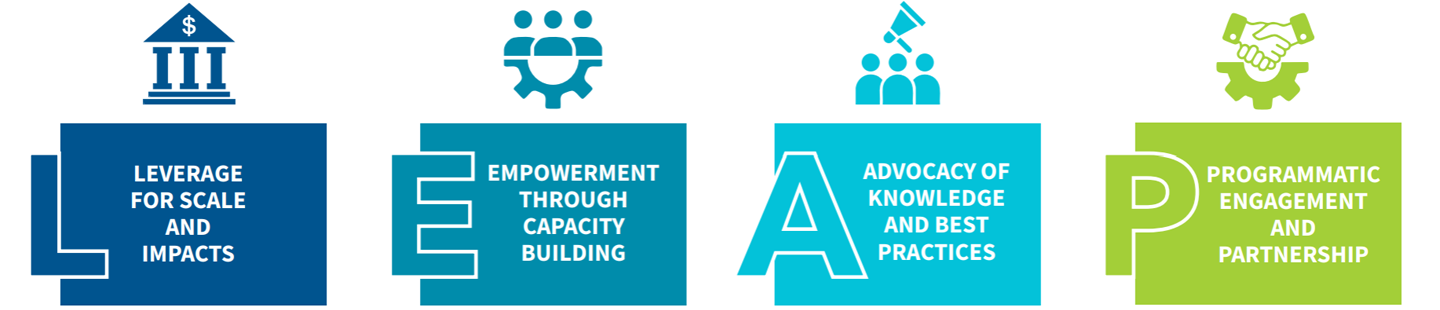
- Through our “LEAP” approach, we aim to help countries, multilateral development banks, the broader donor community, and the private sector to place energy efficiency at the center of energy policies, planning, and programs to achieve scale:
 Netherlands for the World Bank
You must be logged in to post a comment.