
Over the past 15 years, even as incomes have risen and poverty has declined, nearly two-thirds of low- and middle-income countries have experienced setbacks in nutrition, learning, or workforce skills.
Among all low- and middle-income countries, gaps in these outcomes from what should be achievable are large, and the potential cost is cause for alarm: an estimated 51 percent loss in future earnings. Behind this number are children growing up with fewer opportunities to thrive, families struggling to secure a stable future, and communities at risk of losing hard-won social gains.
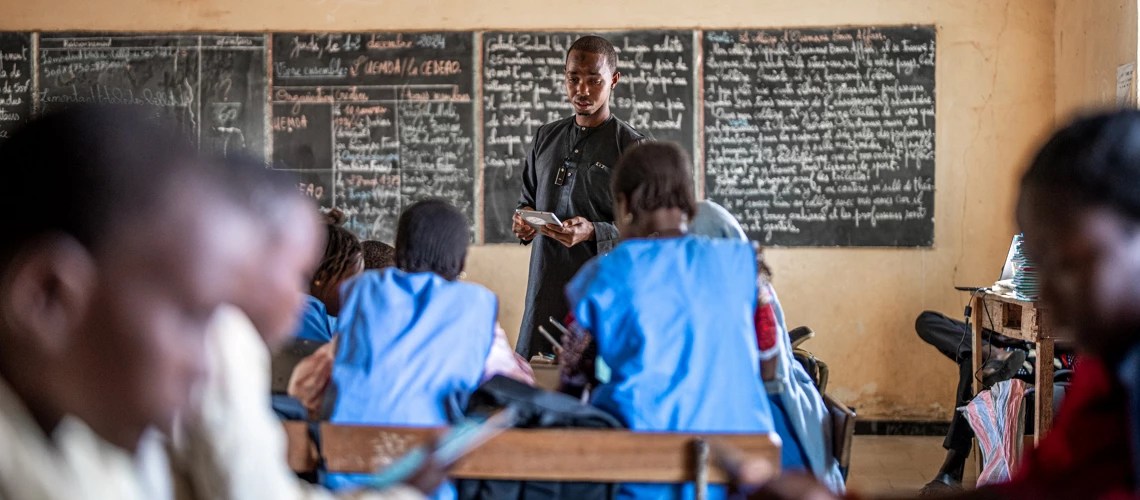
But their future is not written in stone. Young people are one of the greatest sources of hope for our future, and no continent is more blessed with that opportunity than Africa. With the right investments—in clean air and water, healthcare, and education—these young people can grow up ready to thrive.
Across countries and cultures, parents share the same aspiration for their children: a fair chance —especially the chance to get a job and build a secure future.The findings of our newly released Building Human Capital Where It Mattersreport and a companion diagnostic tool, the Human Capital Index Plus, highlight that economic progress alone is no longer enough to ensure that people can reach their full potential. Growth without sustained investment in human capital leaves too many behind. Investing in foundational infrastructure—both human and physical—is one of the key pillars to enable job creation.
Human capital—the knowledge, skills, and health that people invest in and accumulate throughout their lives—is more than just a theory; it has a human face. I saw that very clearly two weeks ago in Kertarahayu, a rural village just two hours from Jakarta, Indonesia. I saw parents attending training sessions so they could support their children’s learning at home. I saw young children receiving preventive care at community health posts. And I saw teachers, midwives, and health volunteers working side by side, focused on the same goal: giving every child a strong start.
The results speak for themselves. For example, stunting in Indonesia has fallen from 37 percent in 2013 to under 20 percent in 2024—an extraordinary achievement that places the country among global leaders in addressing this complex challenge. This progress did not happen organically. It is the result of more than a decade of sustained investment in nutrition and early childhood development, guided by evidence and a clear understanding of what works.
Crucially, that evidence informed a whole-of-government-convergence approach—bringing together health, nutrition, sanitation, early childhood education, and social protection at the community level. Indonesia’s experience in fighting stunting and investing in people offers lessons far beyond its borders.
Human capital is nurtured not only in classrooms and clinics, but in homes, neighborhoods, and workplaces, as we discovered in our research. If we are serious about tackling persistent challenges—malnutrition, poor learning outcomes, and skills shortages—we need to broaden how we think about where policy can make a difference.
Homes matter because gaps in skills and development emerge early—often before the age of five, and long before most children in low- and middle-income countries enter school. These early deficits tend to persist through adolescence and into adulthood. While policy attention to the home environment is often limited to preventing neglect or abuse, evidence shows that parenting programs and quality preschools can help caregivers provide the cognitive and social-emotional support children need to thrive. The challenge is not whether these approaches work, but how to scale them so they reach every child who needs them.
Neighborhoods matter, too. They shape opportunities well beyond access to schools and clinics. In Brazil, a child from a low-income family who grows up in a low-income neighborhood will earn only half as much as a child from a similar family in a high-income neighborhood. Exposure to pollution, crime, or poor infrastructure directly affects health and learning, constraining life chances that would otherwise be expanded by growing up alongside higher income peers. This is why coordination matters. When ministries of education, environment, and public safety align around shared goals, they can design integrated solutions that improve both social and economic outcomes.
And learning does not end with school. Roughly half of all human capital is accrued in the workplace. Yet in many low- and middle-income countries, work offers limited opportunities for training and on-the-job learning. Nearly 70 percent of workers are in agriculture, low-quality self-employment, or micro-firms. Self-employed workers see only half the wage gains based on experience that wage workers do. Policy choices matter here.
Once young people reach adulthood, we must also invest in their hope and optimism—by ensuring there is a pathway to a productive future, whether through employment or entrepreneurship. Well-designed incentives and regulations that support firm growth, expand apprenticeships, and invest in childcare will help create jobs particularly for young people and women. The private sector is an essential partner in this effort.
No country has ever achieved sustained growth or meaningful poverty reduction without investing in its people. For Africa in particular—where the world’s largest youth generation is soon to reach working age—the stakes could not be higher, and the potential gains could not be greater. With the right opportunities, this demographic boom can become a demographic dividend.
To overcome the stagnation we see today, we must widen our lens on human capital— supporting better health, stronger learning, and relevant skills wherever they are formed. Doing so can open the door to a wealth of opportunities and lasting prosperity for families, communities, and economies around the world.
“Credit: World Bank Group. All rights reserved”
 Netherlands for the World Bank
You must be logged in to post a comment.