
This year, the International Day of the World’s Indigenous Peoples recognizes the efforts of Indigenous Youth to support sustainable development, along with their pursuit of justice and preservation of their culture and traditions. The World Bank interviewed Indigenous Youth leaders from Africa, Asia, and Latin America to hear their stories and deepen our understanding of their strategies. While each have experienced unique circumstances, they face similar challenges that put at risk their capacity to sustain their peoples’ significant contributions to conserving the world’s rich cultural and biological diversity.
What kind of adversity do Indigenous Youth face to their cultural identities and unique ways of life?
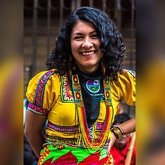
Like other Indigenous Peoples in Colombia, Dokera’s community has faced the assassination of their leaders, threats to burn down their homes, and forced displacement from their ancestral lands.
Dokera traveled long distances to school, faced discrimination while she was there, and struggled to learn in a language that was not her own, yet persisted in her education. She was chosen by her community to serve as a bridge for external help and at 18 she became the first Indigenous woman from her peoples and region to study at university.
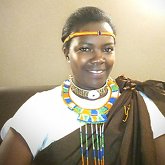
Judy said she suffered from acute sickness as a child as her parents did not trust conventional medicine nor had access to the traditional medicinal products of the forest. She was given a new name and recalls her teacher telling the classroom that the Ogiek people had tails, lived in the forest, and were now extinct. “In fear of what others would say, I lied and said I was Kalenjin, a different group. When the students found out I was Ogiek, I was constantly teased and bullied from that day until I completed my primary education.”
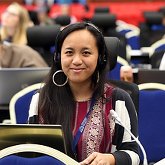
Social media has been a lifeline for us, enabling us to share our stories and raise awareness about our issues.
What strategies are Indigenous Youth using to support their communities and the planet’s well-being?
The young leaders all spoke of reclaiming and securing their lands and languages, documenting and disseminating the knowledge of their elders, and leveraging technologies. They are organizing and exchanging knowledge through the Global Indigenous Youth Caucus (GIYC) and their efforts are gaining traction in local, national and international spaces.
Having faced the front-line trauma of Colombia’s violent conflict, Dokera was nominated in 2022 to serve with 80 other representatives on the National Committee for Participation in Colombia’s peace negotiation with the National Liberation Army.
Judy leads an Ogiek organization that is fighting for the right to return to the Ogiek’s ancestral lands and is promoting practices for sustainable forest livelihoods. In 2022, the African Court on Human and People’s Rights ruled for the Ogiek people to receive reparations and restoration of their ancestral lands. “Our people, if given a chance, can restore our forest back to its original glory.”
From the Amazon, Eglenis Valerio of the Ticuna people and Danixa Moreno of the Nonuya people highlighted the importance of strengthening and revitalizing their connection with the environment as key to their identity.
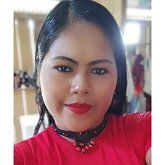
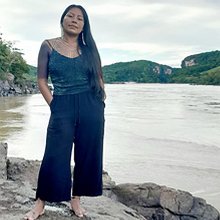
Dokera, Judy, and Abigail spoke of using technologies to capture and teach the stories and traditional knowledge of their elders and for the conservation of their territories. Dokera captures healing rituals on video with community consent and participation. “I have made videos in the communities to show what a healing ritual process looks like, only after consulting with the people on whether and how it can be done. It’s crucial that indigenous people themselves are the ones getting trained, sitting with the elders, and doing things as a community.”
For Judy, social media has become essential: “Social media has been a lifeline for us, enabling us to share our stories and raise awareness about our issues.”
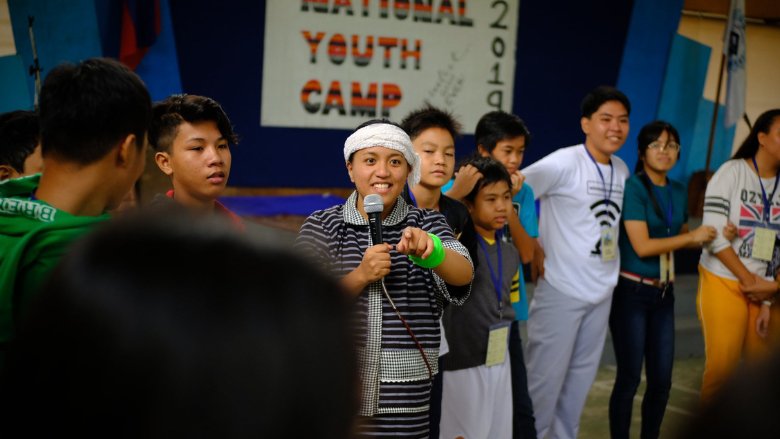
These stories shed light on the critical role that Indigenous Youth play as a lynchpin between their peoples’ historical contributions to a livable planet and their capacity to do so in the future. To do so, they need greater recognition and support to empower their efforts. The World Bank is committed to deepening partnerships with Indigenous Peoples to advance their rights, voice, and inclusion. The success of Indigenous youth is fundamental to creating a more inclusive and livable planet for all.
 Netherlands for the World Bank