
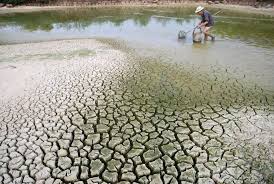
 climate change impacts – including droughts, floods, more intense and frequent natural disasters, and sea-level rise – and the most vulnerable are being hit the hardest.
- Under the Paris Agreement (adopted December 2015, in force November 2016), the world committed to limiting the rise in global temperatures to below 2C by the end of the century.
- Global temperatures have already risen 1.2 degrees Celsius above pre-industrial levels.
Climate change increases volatility and threatens efforts to end poverty.
- Without urgent action to reduce vulnerability, provide access to basic services, and build resilience, climate change impacts could push an additional 100 million people into poverty by 2030.
- The impact of extreme natural disasters is equivalent to a $520 billion loss in annual consumption and forces some 26 million people into poverty each year.
- Climate change will contribute to significant shifts in population settlements over time; development planning will have to take such shifts into account.
The financing required for an orderly transition to a low carbon, resilient global economy can be counted in the trillions, not billions.
- Over the next 15 years, the world will require about $90 trillion in new infrastructure – most of it in developing and middle-income countries. Making the right choices in favor of infrastructure that is climate resilient and locks in a low carbon development pathway is critical and urgent. Action now will avoid huge costs later.
- The IEA estimates that limiting the rise in global temperature to below 2 Celsius by the end of the century will require an average of $3.5 trillion a year in energy sector investments until 2050.
- To mobilize private sector climate financing at scale, the world needs a greener financial sector that integrates climate risks and opportunities and expands the use of approaches such as risk mitigation, blended finance, and green bonds.
Climate action is a vast opportunity for sustainable global development, with investment potential in the trillions of dollars and the ability to drive innovation and create green industries and new jobs.
- The IFC estimates that the NDCs of 21 emerging market economies alone represent $23 trillion in investment opportunities.
- According to IRENA, the global energy transition could contribute $19 trillion in economic gains by 2050.
- The shift to green jobs is underway – 2015 saw the number of US jobs in solar energy overtake those in oil and natural gas extraction. In China, there are 35 percent more people working in clean energy than in oil and gas.
- Countries are already decoupling growth from emissions. The IEA reported in March 2017 that global energy-related carbon dioxide emissions remained flat for a third straight year in 2016 even as the global economy grew.
Achieving the goals of the Paris Agreement will require coordinated global action at an unprecedented scale and speed.
- The Sustainable Development Goals (SDGs) will only be achieved if tackled along with climate change. The world will soon need to feed 9 billion people while reducing emissions, provide electricity access to 1.1 billion people while transitioning from fossil fuels, and prepare for 2 billion new urban dwellers while reducing the carbon footprint of cities and improving urban resilience.
Carbon pricing is one of the strongest policy levers available to shift financing flows. It delivers a triple dividend – it protects the environment, raises revenue, and drives investments to clean technologies.
- The number of carbon pricing initiatives implemented or scheduled has almost doubled over the past five years. To date, over 40 national and 25 subnational jurisdictions, responsible for about a quarter of global greenhouse gas emissions, are now putting a price on carbon.
- However, to shift investment at scale, carbon pricing coverage must expand, and prices must rise. Currently, 85 percent of all forms of carbon pricing sets the price at less than $10 per ton of CO2 equivalent.
- The High-Level Commission on Carbon Prices, led by Joseph Stiglitz and Nicholas Stern, concluded in May 2017 that a carbon price of $40-$80 per ton of CO2 equivalent by 2020, increasing to $50-$100 per ton by 2030, would allow for achievement of the core goal of the Paris Agreement – keeping global temperature rise to below 2C.
 Netherlands for the World Bank
You must be logged in to post a comment.