
STORY HIGHLIGHTS
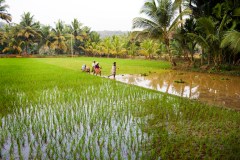
- Farmers in a rural community in Kandahar Province are seeing an increase in landproductivity since the rehabilitation of the village’s
 water canal.
- The project to improve and extend the village water canal was supported by the National Solidarity Programme of the Ministry of Rural Rehabilitation and Development the Government of Afghanistan’s flagship program for rural development. Around 3,877 mall-scale development projects in Kandahar Province have been carried out in areas such as water and sanitation, irrigation, electricity, transportation, education, livelihoods and rural development.
- NSP is supported by the International Development Association, the World Bank Group’s fund for the poorest countries, Afghanistan Reconstruction Trust Fund, and Japan Social Development Fund
 was published.
 ar the Netherlands Enterprise Agency organized an
 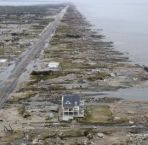 Ministry of Environment, Wildlife and Tourism (MOEWT) in Puntland as well as the National Environment Research and Development (NERAD) Agency in Somaliland will be fully involved in the process of developing the strategy document. This is crucial as an explicit objective of the project activities is to give ownership of response to and mitigation of climate related disasters to Government institutions
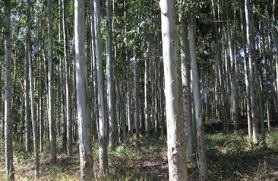
 and Gender study in East Java.
 the role of investment climate factors in guiding foreign direct investment (FDI) decisions. The survey aims to analyze the investment-decision process of FDI firms across all the steps of their investment cycle (e.g., investment plans, entry, expansion, and exit). The survey also measures the importance of investment climate variables in influencing FDI decisions (e.g., investment incentives, promotion, regulations, administrative processes, etc.). We have developed a preliminary draft survey comprises around 30 questions that should take around 20-30 minutes to complete.
 Power in the past constrained its capacity to expand its grid to main population centers or even in the capital city Honiara. While 45% households have reported to have some form of power supply at home, the majority of these households only have small solar panels, typically of 20W, whereas only 9% have power supply from the grid operated by Solomon Islands Electricity Authority (now trading as Solomon Power).
 Netherlands for the World Bank
You must be logged in to post a comment.